
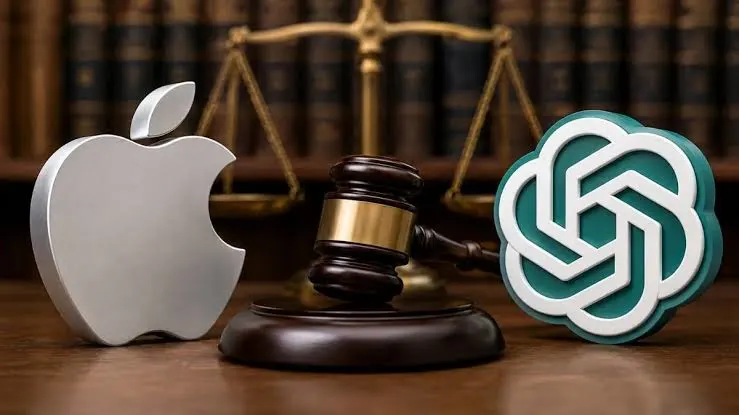

Two years ago, these two companies stood together announcing ChatGPT would live inside the iPhone. Now one of them is accusing the other of stealing secrets at every single level of its organization. Apple sues OpenAI for trade secret theft in a filing that landed in federal court in Northern California on Friday, and reading through the actual complaint, it's honestly hard to overstate how sharp this reversal feels.
Apple's core allegation is direct, OpenAI took the iPhone maker's confidential intellectual property specifically to build its own consumer hardware, a device widely rumored to eventually compete with the iPhone itself. The filing doesn't hedge much either. Apple stated plainly that the alleged scheme operated at every level, from members of OpenAI's technical staff up to its chief hardware officer, and in coordination with business partners.
Why This Apple OpenAI Trade Secret Lawsuit Actually Matters
You might wonder why a corporate lawsuit between two tech giants deserves your attention beyond the headline drama. Here's the thing, this case sits right at the center of who controls the next generation of consumer devices. If AI powered hardware genuinely does start replacing smartphones and apps the way industry insiders predict, then a fight over whose intellectual property built that hardware isn't just legal theater, it's a preview of who might actually own that future. And for OpenAI specifically, this lawsuit lands at a particularly inconvenient moment, right as the company prepares for what's expected to be a historic IPO.
What This Trade Secret Case Really Is, Explained Simply
Think of it like this. Imagine a senior employee leaves your company for a direct competitor, and once there, starts asking former colleagues still working for you to bring in physical prototypes and internal documents during job interviews, all under the guise of casual show and tell. That's essentially the picture Apple paints of its central allegation against OpenAI's chief hardware officer, Tang Tan, a former Apple vice president who spent roughly 24 years at the company before departing.
Apple alleges Tan used confidential internal codenames during OpenAI's recruiting process specifically to draw out more proprietary information from Apple employees interviewing there. The complaint also names Chang Liu, a former senior Apple electrical engineer, accusing him of failing to return a company issued laptop, discovering a way to access Apple's cloud storage after leaving, and downloading dozens of confidential hardware related files.
Read More: Modi Prambanan Temple Visit: Why a 1000 Year Old Shiva Shrine in Indonesia Just Became a Diplomatic Moment
How the Apple vs OpenAI Trade Secret Dispute Unfolded, Step by Step
- Apple and OpenAI announced a partnership in 2024 that brought ChatGPT integration into Apple's operating system.
- OpenAI's chief hardware officer, Tang Tan, a former 24-year Apple veteran, joined io Products, the hardware venture OpenAI later acquired for a reported 6.5 billion dollars.
- Apple alleges Tan used company codenames and coached job candidates still at Apple to bring actual hardware parts to interviews for further information gathering.
- Chang Liu, another former Apple employee who joined OpenAI, is accused of retaining an Apple issued laptop and downloading confidential technical files after his departure.
- Apple says it raised its concerns directly with OpenAI early in its investigation but never received a response.
- Apple filed its lawsuit Friday in the U.S. District Court for the Northern District of California, naming OpenAI, io Products, Tan, and Liu as defendants.
- The company is seeking a jury trial, injunctive relief barring further use of its trade secrets, destruction of proprietary materials, and monetary damages.
That gap, raising concerns privately first and getting silence back, seems to be part of why Apple escalated this into a full federal lawsuit rather than pursuing a quieter resolution.
Read More: SBI Funds Management IPO: Why India's Biggest Asset Manager Going Public on July 14 Actually Matters
Real World Context: Why This Rivalry Runs Deeper Than One Lawsuit
The partnership between Apple and OpenAI had already been cooling well before this filing. Apple announced in January that it was turning to Google instead for key Apple Intelligence efforts, a quiet but telling sign the ChatGPT integration relationship wasn't as solid as it once appeared. Notably, Jony Ive, Apple's former chief design officer who co-founded io Products alongside Tan, was not named as a defendant in the suit, even though his move to OpenAI drew significant industry attention when it happened.
OpenAI, for its part, has firmly denied the allegations. A company spokesperson stated plainly that OpenAI has no interest in other companies' trade secrets and remains focused on building its own innovative technology.
Mistakes People Keep Making When Reading Corporate Lawsuits Like This
It's easy to read a dramatic legal filing and treat every allegation as already proven fact. That's not quite right, no, these are allegations Apple has made in a legal complaint, not a court ruling or an admitted wrongdoing. Equally, it would be a mistake to dismiss the claims outright simply because OpenAI has denied them, lawsuits like this typically get resolved through discovery, evidence review, and eventually a trial or settlement, not through public statements alone.
Read More: Lawrence Bishnoi Gang Indictment: How a Jailed Gangster Ran a Global Crime Empire From His Cell
Pro Tips for Following This Case as It Develops
Watch for court filings and discovery updates rather than relying purely on press statements from either company, since that's where verified evidence will actually surface. Pay attention to how this affects OpenAI's upcoming IPO timeline, mounting legal exposure right before a major public offering tends to matter significantly to investors. And keep an eye on whether Apple's revamped Siri launch, expected later this year, ends up positioned as a direct answer to whatever hardware OpenAI is building.
Closing Thoughts
There's something almost cinematic about how fast this went from partnership to courtroom, ChatGPT inside the iPhone one year, a 41-page complaint alleging systemic theft the next. Corporate rivalries in AI right now feel less like slow burning tension and more like sudden ruptures, the kind of confusion that feels familiar if you've watched enough tech feuds play out before. Whether this ends in a settlement, a jury verdict, or years of prolonged litigation, it's already reshaped how these two companies will be talked about going forward.
Read More: Modi Albanese Meeting: Why This Melbourne Handshake Could Reshape India's Energy Future
Disclaimer: This article is based on information available across the web. Parchar Manch does not take responsibility for its complete accuracy, as the content could not be fully verified.


Comments (0)
No comments yet. Be the first to comment!