
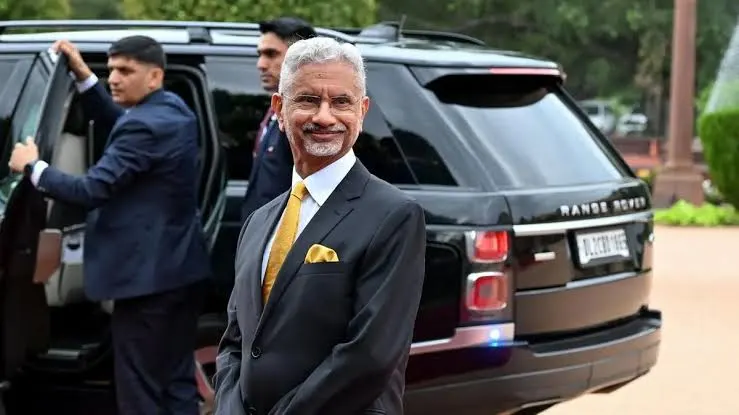

Here's a detail that's easy to skip past: this is India's ninth attempt at a Security Council seat. Not first. Ninth. There's a quiet weight in that number, a kind of institutional patience that most countries simply don't have the standing to claim.
That's the backdrop for the India UNSC 2028-29 campaign , which External Affairs Minister S. Jaishankar formally launched at the United Nations headquarters in New York on July 14, 2026. He wasn't announcing an idea. He was opening a two-year electoral campaign, the kind that ends with a vote at the UN General Assembly, for a non-permanent seat on the Security Council for the 2028-29 term.
Why This Actually Matters
You might think this is diplomacy-speak, something for foreign ministry types to care about, not you. Fair reaction. But a Security Council seat carries actual weight, on sanctions, on peacekeeping mandates, on which conflicts get international attention and which get quietly ignored. When India sits at that table, and it has eight times before, decisions on counterterrorism financing, maritime security, and Global South representation get shaped, at least partly, by New Delhi's priorities.
So this isn't abstract. It touches how terrorist groups get listed or delisted, how peacekeeping missions get resourced, whose voice counts when the world's biggest security disputes get debated. Worth caring about, quietly, even if it never trends on your feed.
Read More: Lawrence Bishnoi Gang Indictment: How a Jailed Gangster Ran a Global Crime Empire From His Cell
What the UNSC Campaign Really Is, Explained Simply
Picture the Security Council as the world's most exclusive committee. Five permanent members hold veto power, the US, UK, France, Russia, China. Then there are 10 rotating seats, non-permanent members, elected for two-year terms by the wider UN General Assembly. India is chasing one of those 10 seats for 2028-29, with the actual vote happening during the UN General Assembly's 81st or so session sometime in 2027.
Think of it like campaigning for a seat on a global board of directors, one where you need votes from roughly two-thirds of nearly 200 member states. Diplomatic visits, statements of support, coalition-building, it's all part of the same electoral machinery, just dressed in different language.
How India's UNSC Campaign Works, Step by Step
The process unfolds gradually, over years, not weeks.
- Formal declaration first. Jaishankar publicly announced India's candidature at UN headquarters, framing it around what officials are calling SHANTI, short for Securing Holistic Advancement through Norms, Trust and Integrity. A framework, essentially, for what India would prioritize if elected.
- Building the diplomatic case. In his remarks, Jaishankar pointed to rising global instability, saying the world is witnessing levels of conflict and violence that threaten even nations far removed from the fighting. He argued the UN, and the Security Council specifically, needs to lead more decisively.
- Courting support, country by country. This is the unglamorous part, foreign ministers quietly lining up endorsements. The Maldives, for one, has already backed India's bid, citing New Delhi's record on regional security cooperation.
- The actual vote. Comes later, likely in 2027, when the UN General Assembly casts ballots and, if India secures the required two-thirds majority, it takes its seat starting January 2028.
Read More: Modi Albanese Meeting: Why This Melbourne Handshake Could Reshape India's Energy Future
Real-World Examples
India's last stint on the Council ran through 2021-22, its eighth term overall, following earlier ones stretching back to 1950-51. During that most recent term, India pushed maritime security and counterterrorism onto the Council's agenda, chaired sessions on technology in UN peacekeeping, and positioned itself, deliberately, as a bridge for Global South concerns.
That track record is precisely what Jaishankar leaned on this time. In his UN remarks, he underlined the need for a transparent, evidence-based sanctions regime, specifically around listing terrorist groups, a subtle nod to disputes India has had over stalled terrorism designations in the past.
Read More: Ramayana Trailer Launch: Why Nitesh Tiwari Is Turning a Movie Preview Into a National Event
Mistakes People Keep Making About This
The most common one: assuming a Security Council bid is a formality, something that just happens because a country is large or influential. It isn't. Campaigns can stall, support can erode, and regional rivals sometimes contest the same seat, splitting votes. Another mistake is confusing non-permanent membership with permanent membership. India has separately pushed for permanent UNSC reform for years, a much bigger, much slower fight, and this 2028-29 campaign is a distinct, more immediate goal.
Read More: Elder Scrolls Online Layoffs: Inside the Cuts That Just Gutted One of Xbox's Biggest MMOs
Pro Tips for Actually Following This Story
Watch which regional bloc India runs within. Non-permanent seats are typically allocated by geographic groupings, and India usually contests within the Asia-Pacific group, where competition, or the absence of it, shapes the odds significantly. Also keep an eye on bilateral visits over the next year. Endorsements like the Maldives' rarely happen in isolation. They tend to follow ministerial visits, trade talks, or security cooperation deals, so those diplomatic trips are often the real signal of where support is heading.
Closing Thoughts
There's something almost rhythmic about a country returning, again and again, to ask the world for a seat at the table it's occupied eight times before. Not quite routine, not quite historic either. Just a nation making the same argument in a slightly different world each time, and hoping the world still agrees.
Read More: Fidji Simo Steps Down From OpenAI: Inside Her Decision to Prioritize Health Over the No. 2 Job
Disclaimer: This article is based on information available across the web. Parchar Manch does not take responsibility for its complete accuracy, as the content could not be fully verified.


Comments (0)
No comments yet. Be the first to comment!