
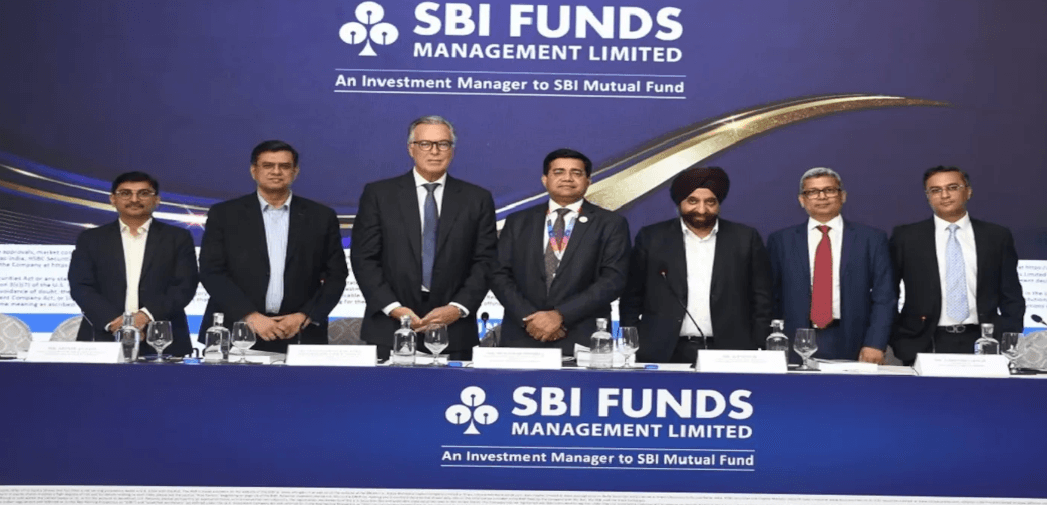

Here's something a lot of people are getting quietly wrong this week. If you invest in an SBI mutual fund scheme, you might be assuming this SBI Funds Management IPO somehow involves your money. It doesn't. Not directly, anyway. And that little mix up is exactly why this story is worth slowing down for.
SBI Funds Management, the company that actually runs SBI Mutual Fund behind the scenes, is going public. Not launching a new scheme, not raising money to expand, something different. This is India's largest asset management company opening its own shares to the stock market for the first time, and the numbers involved are hard to ignore.
Why This Actually Matters
Think about scale for a second. SBI Funds Management manages roughly 16.32 lakh crore rupees in assets, close to 15.5 percent of India's entire mutual fund industry. That's not a niche player quietly filing paperwork. That's the market leader stepping onto the exchange floor. When a company this size lists, it tends to set the tone, the benchmark, for how investors value every other asset manager already trading in India.
There's also a personal angle here, and it's the one people keep tripping over. Owning units in an SBI mutual fund scheme is not the same as owning shares of the company managing that scheme. Your SIP, your NAV, your fund's performance, none of it changes because of this listing. What changes is who can now buy a piece of the business itself, the one earning fees on all that money.
Read More: SBI Funds Management IPO: Everything You Need to Know Before India's Biggest AMC Goes Public
What This IPO Really Is, Explained Simply
Picture a restaurant and the company that owns the building it operates in. Confusing those two would be a mistake, right. Your dinner doesn't taste different depending on who owns the property. That's roughly the relationship between your mutual fund and its manager.
The SBI Funds Management IPO is structured entirely as an Offer for Sale, meaning no new shares are being created. Existing owners, State Bank of India and Amundi India Holding, are simply selling a portion of what they already hold. The money raised goes straight to those sellers, not into the company for growth or expansion. It's less "we need capital to build something new" and more "let's create a public market and let existing owners cash out a slice."
How the IPO Works, Step by Step
Here's the practical timeline, if you're actually thinking about applying.
- The IPO opens for subscription on July 14, 2026, and closes on July 16, 2026.
- The price band sits between 545 rupees and 574 rupees per share, with a lot size of 26 shares, meaning a minimum investment of roughly 14,924 rupees.
- Allotment is expected to be finalized around July 17, 2026, with shares credited to demat accounts shortly after.
- Listing on the BSE and NSE is expected on July 21, 2026.
- You can apply using either ASBA through your bank's net banking or UPI through your broker, whichever your platform supports.
Simple enough mechanically, though the real decision isn't how to apply, it's whether the valuation makes sense once the price band is compared against the company's earnings.
Real-World Examples Worth Knowing
Look at what's already happened elsewhere in this space. ICICI Prudential AMC listed in December 2025 and opened around a 20 percent premium over its issue price. That gives a rough sense of how the market has been pricing pure asset management businesses lately, though past listings don't guarantee anything about this one.
SBI Funds Management itself reported a profit after tax of about 3,067 crore rupees for the year ending March 2026, up from roughly 2,540 crore rupees the year before, alongside a 17 percent rise in revenue. Solid growth, no question. But growth in a business built on fee income comes with a catch worth understanding before you apply.
Read More: SBI Funds Management IPO: Why India's Biggest Asset Manager Going Public on July 14 Actually Matters
Mistakes People Keep Making With This IPO
The most common mistake, and an understandable one, is assuming this is somehow a way to invest in SBI Mutual Fund's performance. It isn't. You're buying a stake in the manager, not the underlying investments. Two very different things, easy to blur when the names look identical.
Another mistake is ignoring the fee pressure quietly reshaping this entire industry. Under new SEBI rules effective April 2026, the maximum expense ratio for equity funds was trimmed, and the same happened for debt funds. Lower fees generally mean thinner margins for asset managers over time, even at a company as dominant as this one. Worth weighing against the current earnings numbers before assuming growth continues at the same pace.
Pro Tips That Actually Help
Don't lean too heavily on the grey market premium as of writing hovering somewhere around 15 percent above the upper price band. GMP shifts daily, isn't regulated, and reflects sentiment more than fundamentals. Useful context, not a decision maker.
Instead, compare this IPO against its listed peers on metrics like earnings per share and price to earnings ratio, since the company's own disclosures already flag that its EPS trails some competitors. And remember, since the entire issue is an Offer for Sale, none of your money goes toward the company's future growth. That's a neutral fact worth knowing, not a warning sign, but it should shape how you think about the "why" behind this listing.




Comments (0)
No comments yet. Be the first to comment!