
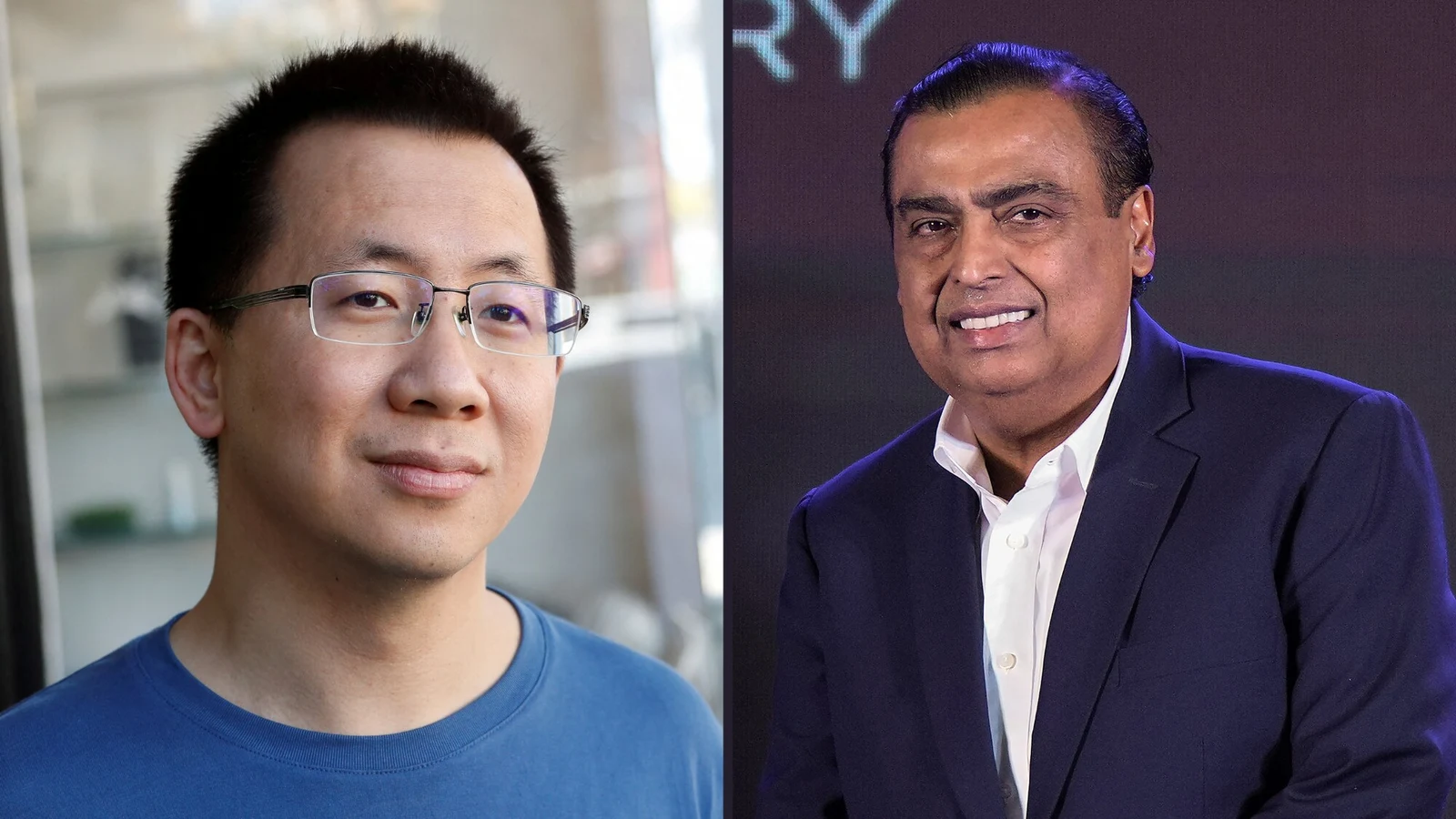

From a Beijing Apartment to $92.8 Billion: How Zhang Yiming Just Overtook Mukesh Ambani He started ByteDance in a small apartment in Beijing in 2012. He was 29 years old, the only child of two civil servants from Fujian province, armed with a software engineering degree and a clear conviction that artificial intelligence could make content smarter. Fourteen years later, Zhang Yiming's net worth has reached $92.8 billion, making him China's richest person and Asia's second-richest, overtaking Mukesh Ambani in a wealth shift that few people saw coming this quickly.
The numbers come from the Bloomberg Billionaires Index, updated on June 3, 2026. They are significant.
Zhang Yiming Net Worth Reaches $92.8 Billion: What Drove the Surge
Two things happened more or less simultaneously to push Zhang Yiming's fortune to this level.
The first was the resolution of ByteDance's long-running US regulatory problem. For years, the Bloomberg index had applied a 25% risk discount to ByteDance's valuation because of the threat that TikTok would be banned in the United States unless its Chinese owner divested. In early 2026, ByteDance completed a transfer of TikTok's US business to an Oracle-led group. With that deal done, and with institutional investors including BlackRock, Fidelity Investments, T. Rowe Price Group, HSG, and General Atlantic publishing fresh valuations of their ByteDance stakes, Bloomberg lowered its risk discount from 25% to 10%.
That single adjustment added more than $24 billion to Zhang's personal fortune.
The second driver was Doubao, ByteDance's AI chatbot. Doubao has crossed 300 million monthly active users and is now China's most widely used AI assistant. It is moving from a subsidised, user-acquisition model toward a tiered subscription model, with pricing being tested between RMB 68 and RMB 500 per month. Institutional investors are treating this as a signal that ByteDance is no longer just a social media company. It is an AI company with genuinely monetisable products.
Where Does ByteDance Stand, and What Is Zhang's Stake?
ByteDance is currently valued at approximately $424 billion, based on an average of investor filings from BlackRock, T. Rowe Price, and Fidelity as of December 2025, as well as valuations from the TikTok US stake sale process in November 2025. Zhang holds roughly 21% of ByteDance. That stake, combined with a reduction in the risk discount and rising underlying valuation, explains the arithmetic behind $92.8 billion.
For context: when Bloomberg first began tracking Zhang's wealth in March 2019, he was worth $13 billion. His fortune has grown more than sevenfold in seven years. ByteDance's global revenue in 2024 was more than $155 billion.
Zhang stepped down as CEO of ByteDance in November 2021, completing a leadership handover he had announced months earlier. He retains more than 50% of the company's voting rights, according to Reuters, and continues to shape ByteDance's long-term AI strategy.
Asia's Richest: The Current Ranking
The updated Bloomberg ranking as of June 3, 2026 places Gautam Adani at the top with $117.4 billion, Zhang Yiming second at $92.8 billion, and Mukesh Ambani third at $86.9 billion. Zhang's rise past Ambani reflects not just ByteDance's performance but also broader institutional confidence in the Chinese tech sector, which has benefited from AI-related tailwinds and supportive government policy.
It is worth pausing on just how fast this wealth creation happened. China's richest individuals collectively hold nearly $2.2 trillion in 2026, close to the 2021 record of $2.5 trillion, and up 31% from $1.68 trillion in 2025.
Closing Thoughts
There is something quietly striking about a person who built one of the world's most powerful content distribution platforms and then stepped away from the CEO role in his thirties. Zhang is 42 now. He lives in Singapore. He does not give many interviews. His company reaches more than a billion people through TikTok alone, and his newest product is competing to become the default AI assistant for hundreds of millions of Chinese users.
The apartment in Beijing was a long time ago. The question now is whether Doubao can become what TikTok was: the unexpected product that changes everything.
Comments (0)
No comments yet. Be the first to comment!