
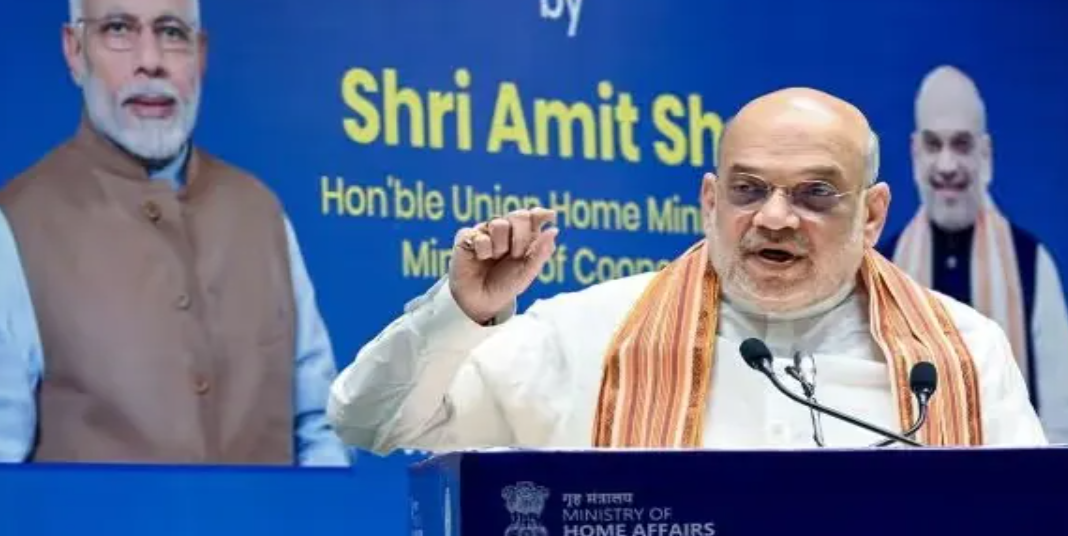

The historic Assam-Nagaland Oil MOU has finally been signed, ending a dispute that had stalled oil and gas development in the region for more than three decades. The agreement marks a major step toward economic growth, regional cooperation, and energy security in Northeast India. Alongside this breakthrough, Union Home Minister Amit Shah has also signaled the possibility of a further rollback of the Armed Forces (Special Powers) Act (AFSPA), highlighting the improving security situation in the region.
Assam-Nagaland Oil MOU Ends a 30-Year Deadlock
The newly signed Assam-Nagaland Oil MOU resolves a long-standing issue that prevented the exploration and development of hydrocarbon resources in border areas shared by the two states. For over 30 years, territorial disagreements created uncertainty for investors and energy companies, delaying several important projects.
The agreement establishes a framework for cooperation in oil and gas exploration, revenue sharing, and future development initiatives. Officials believe that the MOU will encourage investments and unlock significant energy resources that have remained untapped due to the dispute.
The signing of the Assam-Nagaland Oil MOU reflects the central government’s broader efforts to resolve interstate conflicts through dialogue and cooperation rather than prolonged legal and political battles.
Why the Assam-Nagaland Oil MOU Is Important
The Northeast region is rich in natural resources, particularly crude oil and natural gas. However, political and territorial disputes have often slowed development.
Key benefits of the Assam-Nagaland Oil MOU include:
- Increased oil and gas exploration activities
- Higher investment in the energy sector
- New employment opportunities for local communities
- Better infrastructure development in border regions
- Improved cooperation between Assam and Nagaland
- Strengthened energy security for India
Industry experts believe that successful implementation of the Assam-Nagaland Oil MOU could transform the region into a major energy hub in the coming years.
Amit Shah Signals Possible AFSPA Rollback
While discussing the agreement, Union Home Minister Amit Shah also indicated that the government may consider further reducing AFSPA coverage in Northeast India.
AFSPA has been in force in several northeastern states for decades due to insurgency and security concerns. However, the security situation has improved significantly over the last few years.
According to government data, incidents of violence, insurgency-related deaths, and security challenges have declined substantially. As a result, authorities are reviewing whether additional areas can be removed from AFSPA jurisdiction.
The potential rollback of AFSPA is being viewed as a positive signal that peace and stability are gradually taking root across the region.
Economic Growth and Regional Stability
The timing of the Assam-Nagaland Oil MOU is significant. Economic development and security improvements often go hand in hand. As infrastructure projects and energy investments increase, local employment opportunities also grow, reducing the factors that contribute to unrest.
The agreement is expected to boost investor confidence and encourage both public and private sector participation in Northeast India’s development journey.
Experts suggest that successful execution of the Assam-Nagaland Oil MOU could become a model for resolving other interstate disputes through negotiation and collaboration.
What Happens Next?
The focus now shifts to implementation. Both states will need to establish operational mechanisms, coordinate with energy companies, and ensure that local communities benefit from future exploration projects.
If executed effectively, the Assam-Nagaland Oil MOU could unlock significant economic opportunities while strengthening relations between the two neighboring states. Combined with the possibility of further AFSPA rollback, the agreement signals a new era of cooperation, development, and stability in Northeast India.
Conclusion
The Assam-Nagaland Oil MOU represents one of the most important breakthroughs in Northeast India in recent years. By ending a 30-year deadlock over oil exploration and opening the door to future investments, the agreement has the potential to reshape the region’s economic landscape. Coupled with Amit Shah’s indication of a possible AFSPA rollback, the development highlights growing confidence in the Northeast’s peaceful and prosperous future.
Comments (0)
No comments yet. Be the first to comment!