
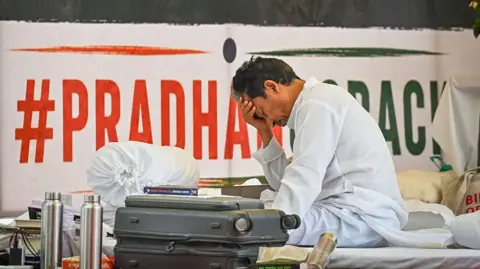

There's a man sitting under a tent in the middle of Delhi's July heat, and he hasn't eaten in over two weeks. That's not a dramatic opening line for effect. It's just what's happening right now, on the ground, at Jantar Mantar. And the strange part is how little most of the country seems to know about it.
The Sonam Wangchuk hunger strike began on June 28, 2026, and by July 14 he had entered its 17th day. His blood pressure has dropped. He's lost close to 8.5 kilograms. Doctors, opposition leaders, actors, ordinary strangers online, they're all saying some version of the same thing: stop, before this becomes something none of us can undo.
So what's actually going on here? Let's slow down and walk through it properly.
Why This Actually Matters
You might be tempted to scroll past this as "just another protest." Fair enough, there are a lot of them. But this one is tied to something that touched millions of Indian households this year: leaked exam papers. When entrance exams like NEET get compromised, it isn't an abstract policy failure. It's a kid who studied for two years suddenly wondering if their seat got taken by someone who cheated. That's the emotional core of why the Jantar Mantar protest has held public attention despite the summer heat and political noise around it.
And there's a bigger thread too. This is being described as one of the more serious challenges to Prime Minister Narendra Modi's twelve years in power, not because Wangchuk is a career politician (he isn't), but because of who's standing beside him.
Read More: RBI Holds Repo Rate at 5.25%: What the June 2026 MPC Decision Really Means for Your Money
What It Really Is, Explained Simply
Here's the part that surprises people. Wangchuk isn't the one who started this. He's fasting in solidarity with the founder of the Cockroach Janta Party, a Gen Z-led political movement that emerged out of pure frustration with the system. The party's own description of itself is somewhat cheeky, calling its members the unemployed and the chronically correct, which tells you something about the tone of this generation's politics. It's less about ideology, more about exhaustion.
The Cockroach Janta Party, or CJP, has been holding a sit-in demanding that Union Education Minister Dharmendra Pradhan resign over the exam paper leaks from May that disrupted lakhs of students' futures. Wangchuk, the Ladakh-based engineer and education reformer who famously inspired a character in the film 3 Idiots, joined the fast to add weight, quite literally, to their demand.
Think of it like this: if a single voice shouting outside parliament gets ignored, sometimes it takes someone the whole country already trusts to make people actually look up.
Read More: Kuku Technologies Files Confidential IPO: What the Rs 3,500 Crore Listing Really Means
How the Protest Has Unfolded, Step by Step
- June 28: Wangchuk begins his fast at Jantar Mantar, alongside the CJP founder's ongoing sit-in.
- Early July: The protest gains traction online as students and parents affected by the exam paper leak start sharing their own stories.
- Mid-July: A younger participant on hunger strike at the same site fainted and had to be hospitalized, raising alarm about how far things could go.
- July 14: Wangchuk enters day 17 of the hunger strike, his health visibly declining, prompting opposition politicians across party lines to publicly urge him to stop.
- Alongside this, a public interest litigation has reportedly been filed in the Delhi High Court asking authorities to intervene medically and, if necessary, provide force feeding to save his life.
Each of these steps builds pressure not just on the government, but on Wangchuk's own supporters, who now have to weigh their respect for his cause against a very real fear of losing him.
Real-World Examples That Ground This Story
Akhilesh Yadav, the former Uttar Pradesh chief minister, has publicly appealed for Wangchuk to end the fast, framing his life as too valuable, given his decades-long work on climate resilience and education reform in Ladakh, to lose over this. Bollywood actor Swara Bhasker visited him at the protest site. Veteran actor Shabana Azmi added her voice too, urging him to stop before irreversible damage sets in. None of these people are directly involved in student politics. That's the point. When public figures from entirely different worlds start showing up at the same tent, it tells you the story has outgrown its original frame.
Mistakes People Keep Making, and Why
A common misreading here is treating this as "Wangchuk's protest." It isn't, not originally. He joined an existing fight. People also assume hunger strikes are symbolic gestures with low real risk. They're not. At 59, with blood pressure already dropping, the medical stakes are genuine, not theatrical.
Pro Tips for Following This Story Properly
If you want to actually understand the exam paper leak controversy and its fallout, don't just follow hashtags. Look at what the Education Ministry has, or hasn't, said in response. Track whether any independent probe gets ordered. And watch how younger, less traditional political groups like CJP are reshaping protest culture in India, because that shift matters well beyond this one fast.
Closing Thoughts
There's something quietly unsettling about watching a well-known figure slowly weaken in public, day after day, while officials stay silent. Whether or not you agree with the demand, the image itself, an aging reformer fasting beside a Gen Z political start-up, says something about where trust in institutions currently stands in India.
Read More: Iran-Israel War 2026: What's Really Happening, Why the US Is In the Middle, and What Comes Next



Comments (0)
No comments yet. Be the first to comment!