
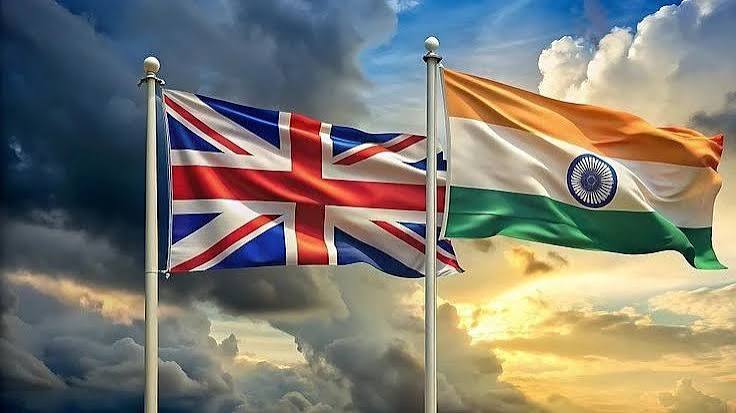

After nearly four years of negotiations, India UK Trade Agreement Comes Into Effect : What Actually Changes for Prices, Jobs and Business Starting Now is finally a reality. The landmark Comprehensive Economic and Trade Agreement (CETA) officially entered into force on July 15, 2026, marking what officials on both sides are calling a defining moment in India-UK economic relations, and one of the most significant trade deals either country has signed in years.
What Exactly Is CETA?
Signed in London on July 24, 2025, by India's Commerce Minister Piyush Goyal and the UK's Secretary of State for Business and Trade Jonathan Reynolds, in the presence of Prime Minister Narendra Modi and UK Prime Minister Keir Starmer, CETA spans 30 chapters covering everything from goods and services trade to digital commerce, government procurement, labour standards, and intellectual property. This breadth is exactly why India UK Trade Agreement Comes Into Effect: What Actually Changes for Prices, Jobs and Business Starting Now has generated so much attention across industries, not just among trade economists.
How Will Prices Change?
For UK consumers, the immediate impact is visible on supermarket shelves and beyond. According to a British government policy paper, products like whiskies, chocolates, cosmetics, soft drinks, and lamb are expected to become cheaper as tariffs are cut. On the Indian side, consumers may eventually see price benefits on cars, electrical circuits, high-end optical products, and medical devices as the UK phases in wider market access for these categories.
Under the deal, India will remove or reduce tariffs on 90 percent of tariff lines, covering 92 percent of existing goods imports from the UK. The UK, meanwhile, is scrapping duties on 96.8 percent of its tariff lines immediately, covering 97.7 percent of trade value, effectively opening its market almost entirely to Indian goods.
What This Means for Jobs and Employment?
Labour-intensive sectors stand to gain the most from this shift. Textiles, leather, footwear, gems and jewellery, handicrafts, food processing, auto components, and organic chemicals are all expected to see higher export volumes, which should translate into new employment opportunities across India. In cities like Tiruppur, a major textile manufacturing hub, exporters have already spent months preparing for the tariff elimination, engaging directly with British retailers such as Marks & Spencer, Primark, and Next.
Commerce Secretary Rajesh Agrawal emphasized that the true measure of success won't just be signing the agreement but how effectively Indian industry capitalizes on it. Industry estimates suggest the textile sector alone could see its UK market share double from 6.6 percent to 12 percent within three to five years, a shift that would create substantial new jobs across the manufacturing supply chain.
What Changes for Businesses and Professionals?
Beyond goods, India UK Trade Agreement Comes Into Effect: What Actually Changes for Prices, Jobs and Business Starting Now also reshapes the landscape for services and professional mobility. India secured one of the most ambitious services commitments the UK has ever offered under a free trade agreement. Indian professionals temporarily working in the UK will now be exempt from contributing to National Insurance for five years, up from the previous three-year exemption, under a companion agreement called the Double Contribution Convention (DCC).
Commerce Minister Piyush Goyal noted that over 75,000 professionals and more than 900 companies are expected to directly benefit from CETA as it takes effect. MSMEs, women entrepreneurs, startups, and young professionals have also been given dedicated focus within the agreement's framework, reflecting an effort to ensure the gains from trade are broadly distributed rather than concentrated among large corporations.
The Bigger Economic Picture
Bilateral merchandise trade between India and the UK reached $25.12 billion in FY 2025-26, with India's exports valued at $13.44 billion against imports of $11.68 billion. Combined with services trade of $35.44 billion in 2024, the total economic relationship between the two nations is substantial and growing. Industry estimates suggest that if fully leveraged, bilateral trade could nearly double from around $58 billion currently to close to $120 billion by 2030.
That said, not everyone is convinced the headline figures alone tell the full story. Trade expert Ajay Srivastava of the Global Trade Research Initiative has cautioned that more than half of India's exports to the UK were already entering duty-free before CETA, meaning the real incremental gains will vary significantly across sectors rather than applying uniformly.
A Template for Future Trade Deals?
Beyond its immediate economic impact, CETA also signals a broader shift in India's trade strategy, moving from a historically cautious approach toward more ambitious market-opening agreements while still protecting sensitive domestic sectors. Officials have indicated that similar negotiations are already underway with the European Union and other trading partners, suggesting this agreement could serve as a template for how India approaches future trade diplomacy.
What Happens Next?
As India UK Trade Agreement Comes Into Effect: What Actually Changes for Prices, Jobs and Business Starting Now moves from policy to practical implementation, the real test will unfold over the coming months and years. Businesses on both sides now have the tools and market access to expand, but converting that opportunity into tangible growth in exports, jobs, and consumer savings will depend on how effectively companies, exporters, and policymakers execute on the framework that has just come into force.
Read More: https://www.parcharmanch.com




Comments (0)
No comments yet. Be the first to comment!