
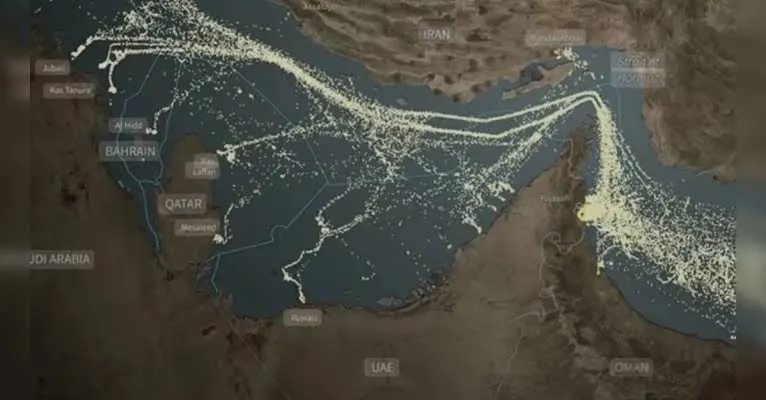

Strait of Hormuz Crisis: Why a 21-Mile Wide Waterway Keeps Shaking Global Oil Markets
Twenty percent. That's roughly the share of the world's seaborne oil, and a similar slice of its liquefied natural gas, that used to move quietly through a strip of water barely 21 miles across at its narrowest point. The Strait of Hormuz crisis isn't a new story exactly, it's been unfolding in waves since February, but this past week brought it roaring back into headlines after tankers were struck, missiles were fired, and the fragile truce holding things together seemed to genuinely crack.
Let's actually walk through what's happened, because the details here matter more than the headlines suggest, and honestly, the situation keeps shifting fast enough that even careful tracking sometimes lags a day or two behind reality.
Why This Actually Matters
If you've filled a gas tank recently and noticed prices creeping up, this is directly connected. The Strait of Hormuz sits between Iran and Oman, and it's the only sea route connecting Gulf oil producers to the open ocean. When that route gets disrupted, even partially, energy markets feel it almost immediately, and so, eventually, does everyone paying for fuel, shipping, or anything that depends on global trade moving smoothly.
Beyond fuel prices, this matters because of what it represents, a genuine test of whether a ceasefire agreement between two nations can actually hold when neither side agrees on what the agreement even means. That's not an abstract diplomatic detail. It's the difference between stability and renewed military conflict in one of the most strategically important waterways on the planet.
What's Really Happening, Explained Simply
Picture two neighbors who've agreed to share a narrow shared driveway, both claiming they understand the terms differently. That's roughly the dispute at the heart of this crisis. Back in June, the United States and Iran signed a memorandum of understanding intended to end months of conflict that began in late February, when the US and Israel launched strikes against Iran. Part of that agreement involved Iran allowing safe passage for commercial ships through the strait for a defined period, in exchange for the US lifting a naval blockade on Iranian ports.
The problem, and it's a genuinely contested one, is that Iran and the US read the same clause differently. Iranian officials argue the agreement gives them authority to manage and control traffic through the strait. The US insists the language only obligates Iran not to block transit, without granting it the right to dictate which ships pass or under what terms. That disagreement is where things started unraveling.
Read More: US-Iran Oil Deal 2026: What the Historic Agreement Means for Oil Prices, the Strait of Hormuz, and India
How the Recent Escalation Unfolded, Step by Step
Here's the practical sequence of what's happened most recently, based on verified reporting.
- On July 6 and 7, two tankers, a Qatari-owned LNG carrier and a Saudi-flagged supertanker, were struck by projectiles in the strait, both sustaining damage, with the LNG tanker evacuated after a fire broke out near its engine room.
- Qatar publicly attributed the attack on its vessel to Iran, while Iranian state media suggested responsibility without an official claim from Tehran itself.
- Within roughly 24 hours, Iran's Revolutionary Guard Corps struck a third commercial vessel, according to US officials.
- In response, the US Treasury Department reimposed sanctions on Iranian oil exports that had been suspended under the June agreement, and US Central Command launched a wave of strikes against Iranian military targets connected to the strait.
- Iran responded with its own strikes, reportedly targeting sites in Bahrain, Kuwait, Qatar, Jordan, and Iraq, while also shooting down a US drone.
- By July 10, shipping data showed traffic through the US-coordinated route near Oman had effectively ground to a halt, with no large vessels transiting that lane while broadcasting their location since July 7.
Each of these steps happened within days of each other, a genuinely rapid unraveling of an agreement that had only been in place for roughly three weeks.
Real-World Examples That Ground This
Consider the sheer scale of disruption already visible in shipping data. Before this war began, an estimated 120 to 140 vessels crossed the strait daily, about half of them oil tankers moving roughly 20 million barrels of crude per day. At the height of earlier fighting, that traffic collapsed to as few as two tankers a day. Even during a relatively calmer stretch in early July, daily crossings hovered in the 30s and 40s, a fraction of normal volume.
Or consider the diplomatic layer running alongside the military one. Iran's ambassador to China has said Beijing and other "friendly" nations would receive special consideration on any future transit fees through the strait, a signal that Iran intends to use control over this waterway as genuine geopolitical leverage, not just a security measure.
Mistakes People Keep Making When Following This Story
A common mistake is assuming attacks on ships are always clearly attributed the moment they happen. They often aren't. Several of the recent tanker strikes involved conflicting or unconfirmed claims, Iranian state media hinting at responsibility without Tehran officially claiming the attacks, and US officials citing anonymous sources rather than public confirmation. Treating early reports as fully settled fact, before official investigations or claims catch up, risks spreading assumptions that later prove incomplete.
Another mistake is assuming oil prices should have spiked dramatically by now given the severity of the conflict. Reporting through Friday actually showed oil prices holding relatively steady, hovering around 73 dollars a barrel, even amid the latest exchange of strikes, a reminder that markets don't always move in the way the news cycle's intensity might suggest.
Read More: Japanese Yen Falls to Weakest Level Against Dollar Since 1986, Here's What That Actually Means
Pro Tips That Actually Help
If you're trying to track this situation responsibly, lean on shipping data providers and maritime authorities like UKMTO for real time vessel incident reports, rather than relying solely on social media claims from either side, since attribution in this conflict has repeatedly been contested and slow to confirm.
It's also worth watching diplomatic channels closely, specifically talks involving Oman and Pakistan, who have been acting as mediators between Washington and Tehran, since any durable resolution to the Strait of Hormuz dispute will likely emerge from those back channel negotiations rather than from military escalation alone.
Closing Thoughts
There's a particular kind of exhaustion that settles in when a ceasefire collapses for the second or third time in the same conflict, each round of strikes followed by another round of talks, another temporary calm, another rupture. The Strait of Hormuz crisis is, at its core, a dispute over control of a narrow stretch of water, but its consequences ripple out into fuel prices, shipping routes, and international diplomacy far beyond the Gulf itself. This is a genuinely fast moving, contested situation, and given how quickly things have shifted over just the past week, it's worth checking current reporting directly for the latest developments rather than treating any single account as the final word.
Read More: HDFC Bank Appoints Rajiv Kumar as Part-Time Chairman, Ending a Months-Long Governance Search
Disclaimer: This article is based on information available across the web. Parchar Manch does not take responsibility for its complete accuracy, as the content could not be fully verified.
Comments (0)
No comments yet. Be the first to comment!