
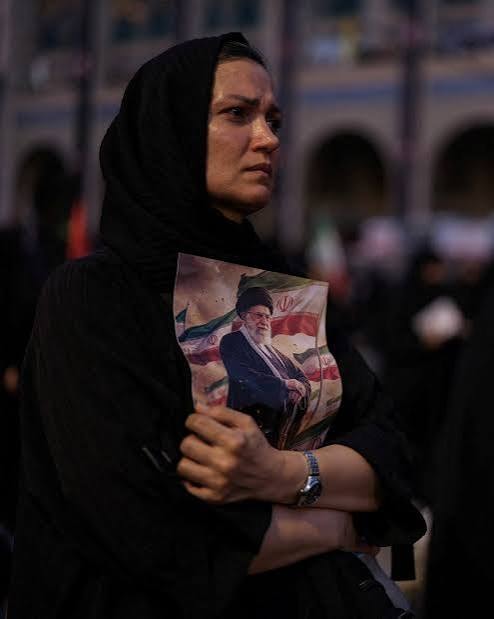

Why the Khamenei Funeral Was Delayed Four Months?
Khamenei's state funeral was originally scheduled to take place in Tehran and Mashhad in early March but was postponed due to the ongoing war.Iranian officials only confirmed the funeral date last month, just days before Iran and the United States signed a memorandum intended to mark the formal end of hostilities . Muslim funeral customs typically call for burial soon after death, making this a highly unusual departure from tradition, one driven by the chaos of active conflict rather than by choice.
The Route: Tehran, Qom, Najaf, Karbala, and Mashhad
The Khamenei funeral was structured as a week-long journey across two countries. Commemorations began in Tehran, with funeral ceremonies and processions running for seven days and religious rites planned across cities in both Iran and Iraq. After public viewings and processions in Tehran, the route moved south toward Qom, then crossed into Iraq for a reception at Najaf International Airport followed by processions through Najaf and Karbala. The body then returned to Iran for burial at the shrine of Imam Reza in Mashhad, the city where Khamenei was born.
Crowds on a Historic Scale
Iranian authorities anticipated turnout on a scale rarely seen anywhere in the world. Tehran's mayor suggested that as many as 20 million people could turn out for the funeral in the capital alone. Officials expect the proceedings to surpass the scale of the 1989 funeral for Ayatollah Ruhollah Khomeini, which drew roughly 10 million mourners. Streets around the Grand Mosalla filled well before dawn each day of the ceremonies, with mourners lining a multi-kilometer procession route through the city.
A Missing Successor
One of the most closely watched aspects of the Khamenei funeral was the near-total public absence of his son and successor. Khamenei's 56-year-old son, Mojtaba, was wounded in the same attack that killed his father and was appointed the new Supreme Leader in March, but has not appeared in public or issued a statement since then. His representative in India confirmed he would not attend the funeral, citing security concerns following an Israeli threat to assassinate him as well. Commentators have noted the symbolic weight of this absence, given that his father had appeared prominently at Khomeini's funeral decades earlier.
World Leaders Descend on Tehran
Despite ongoing tensions, the Khamenei funeral drew an unusually wide array of foreign dignitaries. Representatives from more than 100 countries were expected to attend. Pakistan's prime minister attended in person, reflecting Islamabad's role in mediating the ceasefire and a later memorandum between the US and Iran. India sent its deputy foreign minister along with a state governor, while China dispatched a senior official from its parliament's standing committee and Russia's security council deputy chairman represented Moscow.
Grief, Defiance, and Divided Feelings
The mood on the ground was far from uniform. Mourners chanted slogans including "Death to America" and "Death to Israel" throughout the ceremonies. The proceedings were also marked by public displays of defiance, including a poet who read a piece criticizing the US president. Yet not everyone in Tehran shared in the collective mourning. A young woman whose brother was killed during nationwide protests told a reporter that the funeral offered her little comfort, saying that even in death Khamenei continues to cause pain for families like hers.
Logistics of a Nation in Mourning
Staging the Khamenei funeral required enormous state resources. The government arranged for 50 million loaves of bread to be distributed to attendees, while Tehran province prepared 5,000 mosques and 700 schools to house pilgrims. Free fiber-optic internet access points were also set up at ten locations to accommodate the crowds. The scale of preparation underscored how central the event has become to the government's efforts to project stability after months of war.
A Funeral as Political Statement
Analysts view the Khamenei funeral as more than a religious rite. A Middle East studies expert noted that the event offers those seeking to preserve Khamenei's legacy a chance to portray the Islamic Republic as strong, resilient, and capable of resisting outside pressure. A senior Revolutionary Guard commander warned the United States against any attack during the funeral processions, a message underscoring the tension still simmering beneath the ceremonies.
Conclusion
The Khamenei funeral, four months in the making, has become both a farewell and a statement, a moment for Iran to mourn a leader who shaped the country for nearly forty years while also signaling defiance toward its adversaries abroad. As processions move from Tehran through Qom, into Iraq, and finally to burial in Mashhad, the world is watching closely to see what comes next for a Islamic Republic navigating an uncertain political transition in the shadow of war.
Read More: https://www.parcharmanch.com/


Comments (0)
No comments yet. Be the first to comment!