

Sonam Wangchuk Social activist Sonam Wangchuk has once again found himself at the centre of a national political storm after Delhi Police removed him from his hunger strike protest and shifted him to hospital. The dramatic early morning operation has reignited debate over the right to peaceful protest, government accountability, and the growing student-led movement demanding reforms in India's examination system.
Wangchuk, who had been on an indefinite hunger strike for more than 20 days, was protesting alongside the youth-led https://www.parcharmanch.com/ movement. The campaign has demanded the resignation of Union Education Minister Dharmendra Pradhan, alleging failures in handling examination paper leaks and calling for wider reforms in recruitment and examination systems.
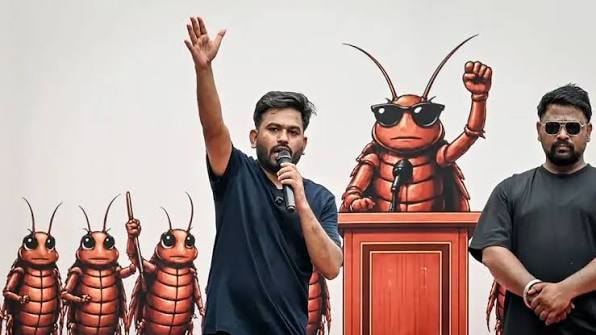
Cockroach Janta Party (CJP) How the Police Operation Unfolded
According to reports, Delhi Police arrived at Jantar Mantar early in the morning with medical teams and security personnel. Television footage showed officers surrounding Wangchuk before lifting him onto a stretcher and taking him to an ambulance waiting outside the protest site. Organisers described the action as a forced removal, while police said the intervention was carried out after doctors warned that his health had significantly deteriorated.
Authorities stated that the decision followed medical advice and court-directed health monitoring. Officials argued that the primary objective was to prevent further risk to Wangchuk's life rather than suppress the protest itself.
Protesters Call It an Attack on Peaceful Demonstration
Supporters strongly criticised the police action, arguing that Wangchuk was exercising his democratic right to peaceful protest. Student groups claimed the removal was intended to weaken the movement before planned demonstrations and parliamentary protests.
Several opposition leaders also questioned the timing of the operation, saying that instead of addressing students' concerns, authorities had chosen to remove one of the movement's most recognisable faces. The incident quickly became one of the most discussed political topics across social media platforms.
Why the Hunger Strike Matters
Wangchuk's protest became a powerful symbol for thousands of students frustrated by repeated controversies surrounding competitive examinations. Demonstrators argue that examination irregularities have affected careers, delayed recruitment, and reduced trust in public institutions.
The movement has demanded stronger safeguards against paper leaks, faster investigations into alleged irregularities, greater transparency in examination systems, and accountability from education authorities. These demands have resonated with many competitive exam aspirants across the country.
Government Response
The government has defended its handling of the situation, stating that protecting Wangchuk's health was the immediate priority. Officials have also maintained that examination reforms are already being implemented and that investigations into paper leak cases are continuing.
Following discussions between government representatives and protest leaders, Wangchuk later ended his 26-day hunger strike after receiving written assurances that examination reforms would be discussed and that peaceful protesters would not face legal action. However, protest organisers said their broader campaign would continue until their key political demands were addressed.
What Happens Next?
Although Sonam Wangchuk has ended his fast, the controversy is far from over. The student movement continues to push for structural reforms in India's examination system, while political parties remain sharply divided over the government's response.
Whether the latest developments lead to meaningful policy changes or simply intensify the political confrontation will depend on future negotiations between the government and protest leaders. For now, Wangchuk's removal from the protest site has become another defining moment in one of India's most closely watched student-led movements, raising broader questions about public accountability, democratic protest, and the future of education reform.




Comments (0)
No comments yet. Be the first to comment!