
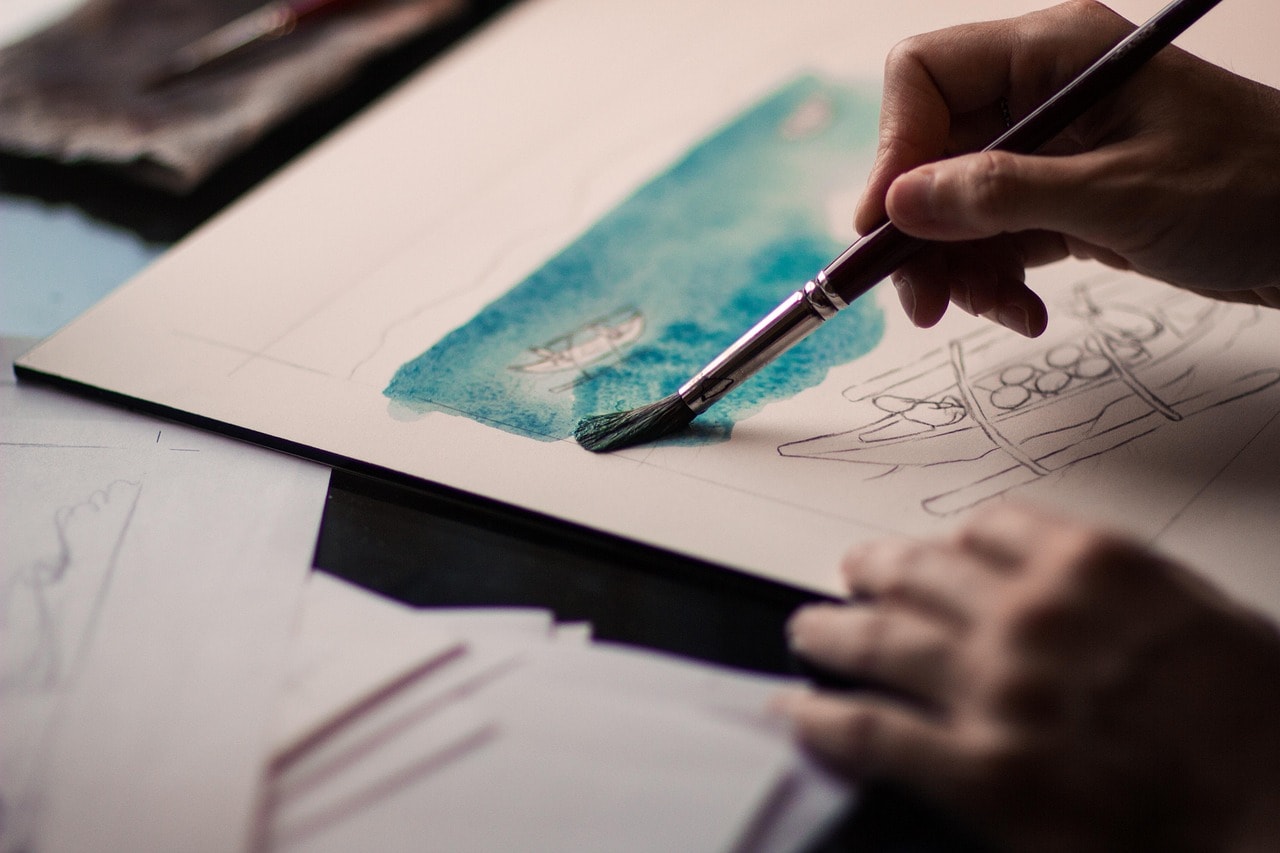

You know that hollow feeling when you sit down to create and nothing comes out? Your hands hover over the keyboard or brush, and the blank page stares back like a dare. You try to push through, but every idea feels flat, every word feels forced. The worst part? You start to believe the lie that you've lost it for good. But here's the truth I've learned after a decade of creative work: being stuck isn't a sign of failure—it's a signal that you're using the wrong approach. Let me show you how to reconnect with your creativity, not by forcing it, but by outsmarting the very things that block it.
Stop Trying to Be Original
When you're stuck, the pressure to be original can be paralyzing. You think, "It's all been done before," and you're right. But that doesn't matter. Originality is overrated; authenticity is not. The most compelling creative work often comes from remixing, combining, or reinterpreting what already exists. Think of Quentin Tarantino, who openly borrows from every genre imaginable, or David Bowie, who famously "stole" and transformed ideas from other musicians.
Instead of aiming for something never seen before, aim for something only you could make. Take a classic trope, a familiar topic, or a common problem, and apply your unique perspective, your lived experience, your quirks. Your voice is the one thing that can't be replicated. So, lower the bar from "revolutionary" to "honest." Write that poem about your childhood kitchen, paint that street corner you pass every day, design that app for a frustration you can't shake. The magic happens when you stop worrying about being new and start being real.
"Creativity is not about making something from nothing. It's about making connections that no one else has made before."
Here's a practical exercise: pick a piece of creative work you admire—a song, a painting, a short story—and try to recreate it in your own style. Don't copy it; strip it down to its core idea and rebuild it through your lens. This isn't plagiarism; it's a time-honored learning technique. It removes the pressure to be original because you're not inventing from scratch. You're having a conversation with the work that inspires you.
Embrace the Ugly First Draft
Perfectionism is the thief of creativity. When you demand that every sentence be brilliant, every brushstroke be flawless, you freeze. The fix? Give yourself permission to create something truly terrible. I call it the "ugly first draft." Write with the intention that no one will ever see it. Paint with the goal of just moving color around. Code with the mindset that you'll throw it away.
This is not just a feel-good mantra; it's based on how our brains work. When you're overly focused on the outcome, your prefrontal cortex—the part responsible for critical thinking—goes into overdrive, shutting down the more spontaneous, associative networks that fuel creativity. By lowering the stakes and telling yourself, "This is just for me, and it's allowed to suck," you free up those networks to play.
One of my favorite techniques is to set a timer for 10 minutes and write continuously without stopping, even if I have to write "I don't know what to say" over and over. You'd be surprised how quickly the nonsense gives way to a real thought. The same goes for sketching: draw without lifting your pen, letting lines wander. The goal isn't a masterpiece; it's to get the gears turning. Once you have that ugly draft, you can edit, refine, and polish. But you can't edit a blank page.
- Set a 10-minute timer and write stream-of-consciousness without stopping.
- Draw or sketch with your non-dominant hand to bypass your inner critic.
- Write a terrible poem on purpose—make it as clichéd as possible.
- Create a "bad version" of your project first, then improve it.
Change Your Input to Change Your Output
If you're stuck, it might be because your well is dry. You've been pouring out creative energy without refilling it. Just like a farmer rotates crops to keep the soil fertile, you need to rotate your inputs. If you're a writer, read a book outside your genre. If you're a designer, visit a museum. If you're a musician, listen to a genre you usually ignore.
But here's the twist: don't consume passively. Actively seek out ideas that contradict your own, or explore subjects you know nothing about. When you feed your brain with novel information, it starts forming new connections. This is why so many creative breakthroughs happen in the shower or while walking—your mind is making unexpected links between disparate ideas. You can accelerate this process by deliberately exposing yourself to new stimuli.
Try this: for one week, change one routine thing. Take a different route to work, listen to a podcast on a topic you know nothing about, or cook a meal from a cuisine you've never tried. These small disruptions shake up your neural pathways and can lead to fresh perspectives. You'll be amazed at how a random fact about deep-sea creatures can inspire a plot twist or a color palette.
- Read a chapter of a book in a genre you'd never pick up.
- Watch a documentary on a subject you find boring (trust me).
- Take a walk without your phone and just observe.
- Visit a place you've never been, even if it's just a park across town.
Schedule Your Creativity (Yes, Really)
We often wait for inspiration to strike, but inspiration is fickle. The most prolific creators—from Maya Angelou to Stephen King—swear by routine. They show up at the same time every day, whether they feel like it or not. This isn't about discipline for discipline's sake; it's about training your brain to enter a creative state on demand.
When you create a schedule, you're making a commitment to your craft. You're saying, "This matters enough to me to protect this time." That alone can boost your motivation. But more importantly, the regularity signals to your subconscious that it's time to get to work. Over time, your brain becomes conditioned: 9 AM means writing, and the ideas start flowing more easily because that's the habit.
Start small: pick a time of day when you have the most energy, and block off just 15 minutes. Use that time to brainstorm, sketch, or write—no pressure to produce something great. The goal is to show up. As you build the habit, you'll find that the creative muscle gets stronger, and you'll naturally want to extend your sessions. And remember, it's okay to miss a day; what matters is that you come back the next.
"Inspiration exists, but it has to find you working." — Pablo Picasso
Collaborate to Break the Echo Chamber
Sometimes, the best way to get unstuck is to get out of your own head. Collaborating with another creative person can jolt you out of your rut. When you bounce ideas off someone else, you're forced to articulate your thoughts, and their feedback can open doors you didn't see. It's like having a second pair of eyes, but for your imagination.
Find a friend, a colleague, or even an online community. You don't have to work on the same project; you can simply share your struggles and brainstorm together. The act of talking it out can clarify your own thinking. And when you hear someone else's take on your idea, you might just find the spark you needed.
Here's a fun exercise: give a friend a random object (like a paperclip) and ask them to come up with 10 uses for it. Then, you do the same. Compare your lists. This silly game loosens up your brain and reminds you that there are always multiple answers to a problem. You'll laugh, and in that laughter, creativity flows. So, don't be afraid to reach out. Creativity is not a solitary act; it thrives in connection.
Frequently Asked Questions
What if I don't have anyone to collaborate with?
You can still benefit from collaboration without a partner. Join online communities (like Reddit's r/creativewriting or a local art meetup) or engage with forums where people share work for feedback. Even just posting your struggles and asking for tips can create a sense of connection. And remember, you can "collaborate" with a book—read a challenging piece and write a response to it, as if you're having a dialogue with the author.
How do I stay creative when I have a full-time job and family?
You don't need hours; you need minutes. The key is to make creativity a non-negotiable, tiny habit. Steal 10 minutes during your lunch break to sketch, or write one sentence before bed. Use your commute to brainstorm. The consistency matters more than the duration. And don't underestimate the power of "micro-creativity"—thinking of a new recipe while washing dishes counts. It's all about keeping that muscle active.
Is it normal to feel like everything I make is garbage?
Absolutely. That feeling is part of the creative process, especially when you're growing. It's called the "taste gap"—the gap between your taste and your current skills. It's frustrating, but it's also a sign that you have good taste and are pushing yourself. Keep going. Your skills will catch up. And remember, even the work you deem garbage is teaching you something. Save it, and look back in a month to see how far you've come.
Final Thoughts
Creative blocks are not walls; they're detours. They force you to slow down, reassess, and find a new path. By letting go of originality, embracing ugly drafts, changing your inputs, scheduling your time, and reaching out to others, you're not just getting unstuck—you're building a sustainable creative practice that will weather any storm. So, the next time you feel stuck, don't panic. Take a deep breath, pick one of these strategies, and start. The creative you is still there, just waiting for the right invitation.


Comments (0)
No comments yet. Be the first to comment!