

Why the Original Tariffs Were Imposed
To understand the significance of this news, it helps to look back. Earlier, Washington had accused India of indirectly funding the war in Ukraine by continuing to import roughly 1.5 million barrels of Russian oil per day — more than a third of India's total oil imports. The US had already imposed a 25% tariff on Indian goods, which was later doubled to 50% after Trump accused India of buying Russian crude "for big profits" and reselling it internationally.
India's Ministry of External Affairs had previously called the tariffs "unjustified and unreasonable," while continuing to defend its right to source affordable energy for its economy.
Modi's Response and India's Position
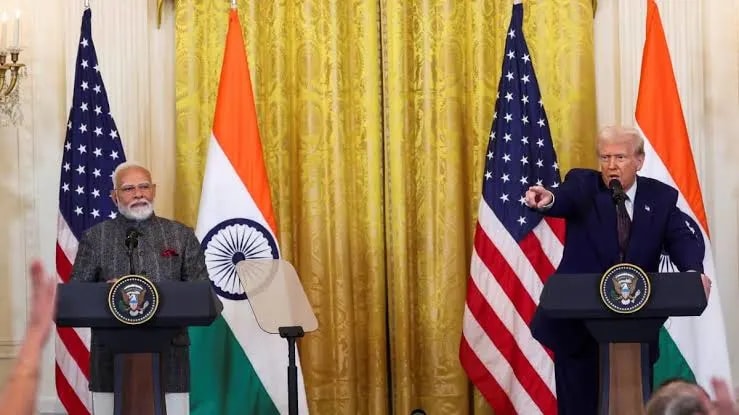
Prime Minister Modi welcomed the reduced tariffs in a post on X (formerly Twitter), calling it a positive step for bilateral trade. Interestingly, Modi's statement did not explicitly confirm a commitment to cut Russian oil imports, leaving some ambiguity about how quickly — or fully — India will pivot its energy sourcing strategy.
What This Means Going Forward
While the tariff rollback is a major diplomatic and economic win for India, questions remain about implementation. Will India genuinely reduce Russian oil imports, or will it continue balancing energy security with US relations? Trade experts suggest the coming months will be crucial in determining whether this is a lasting reset in India-US trade ties or a temporary truce.
For now, the India US tariff deal 2026 signals a thaw in what had become one of the most strained periods in recent India-US economic relations, and it sets the stage for deeper trade cooperation between the world's oldest and largest democracies.




Comments (0)
No comments yet. Be the first to comment!