

Dear reader,
I want to talk about something we rarely do anymore, something that feels almost illicit in its slowness: reading a poem out loud, to yourself, in a room with the door closed. Not performing it for an audience, not recording it for a podcast, but just letting the words tumble off your tongue and hang in the air, unobserved. It sounds simple, even silly, but I’ve come to believe it’s a small act of rebellion—a way to reclaim your voice from the noise of notifications and the endless scroll.
The Body Remembers What the Eye Skips
When you read silently, you’re a fast-food consumer of language. You grab the meaning, chew it quickly, and move on. But when you read aloud, you’re forced to slow down. Your breath becomes the rhythm section. Your lips shape each vowel like a potter’s hands. The poem stops being a text and becomes a physical thing—a song you sing with your own vocal cords.
I remember the first time I truly did this. It was a rainy Sunday, and I was alone, feeling that familiar ache of loneliness that has no name. I picked up a collection by Mary Oliver—the one with the dog-eared pages. I read “The Summer Day” out loud, and when I got to the final question, “Tell me, what is it you plan to do / with your one wild and precious life?” I felt a lump in my throat. It wasn’t the words themselves; I’d read them a dozen times. It was the sound of my own voice asking that question. It made it real. It made it mine.
That’s the magic: when you read aloud, you lend the poet your breath, your body, your presence. The poem becomes a duet between you and the dead or distant stranger who wrote it. And in that duet, you discover things about yourself—your hesitations, your emphases, your secret longings. You might stumble over a word, and that stumble reveals something. You might rush a line, and that rush tells you you’re avoiding it.
An Antidote to the Performance of Everything
We live in a world where everything is broadcast. We perform our coffee art, our workout routines, our political opinions. Even our private thoughts are curated for an invisible audience. But reading poetry aloud to no one is the opposite of that. It’s the only performance with zero witnesses, zero applause, zero judgement. You can be ugly with it. You can cry. You can laugh. You can mangle a metaphor and start over.
“Poetry is not a luxury, but a necessity of the spirit—and reading it aloud is how we feed that hunger with our own hands.”
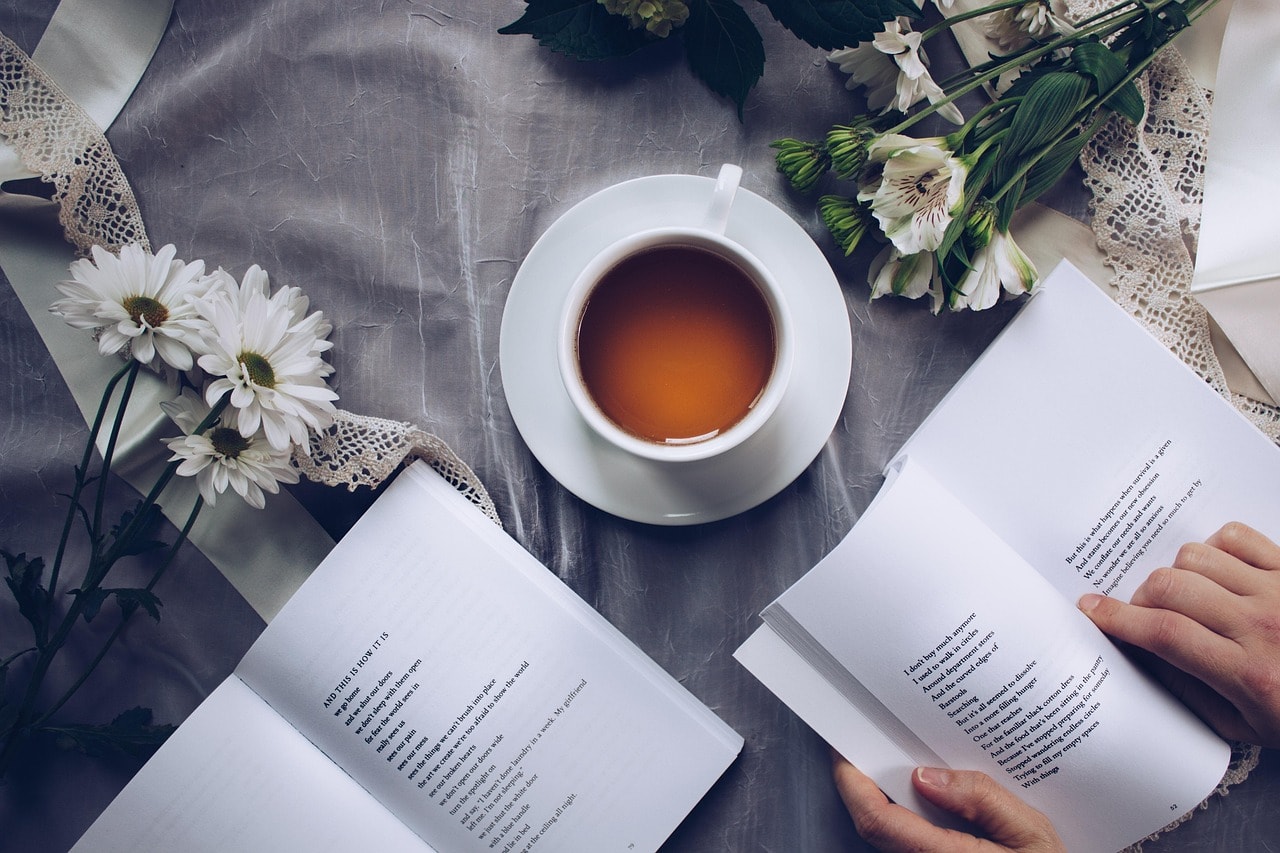
I’ve started doing this as a nightly ritual. I turn off the lights, light a candle, and read one poem—just one—aloud. Some nights I pick a classic: a Shakespeare sonnet, a Dickinson piece. Other nights I read something contemporary, like Ocean Vuong or Ada Limón. The choice doesn’t matter. What matters is the act itself. It’s a way of saying to the day, “You don’t get the last word. I do.”
And here’s the strange thing: after a few weeks, I noticed that my inner monologue changed. The critical voice that usually narrates my life—the one that says “you’re not good enough,” “you’re wasting time,” “you should be doing something productive”—that voice softened. It started to sound more like the poems I read. It began to use metaphors, to pause, to notice the light on the wall, the hum of the fridge. Reading aloud had tuned my ear to the music of my own mind.
How to Start (It’s Easier Than You Think)
If you’re curious, here’s a gentle way to begin:
- Pick a poem that feels like a secret—something you’d be embarrassed to admit you love. That’s a good sign.
- Find a space where you can be fully alone. A locked bathroom works. A parked car works. You just need privacy.
- Read the poem silently first, just to get the lay of the land. Then, take a breath, and read it aloud slowly. Don’t perform. Just speak.
- Notice what you feel. If you feel silly, that’s fine—lean into it. If you feel moved, let yourself be moved. There’s no wrong reaction.
You don’t need to understand every line. You don’t need to be an expert. All you need is a poem and a voice. And remember, you’re not doing this for anyone else. You’re doing it for the sheer, stubborn pleasure of making sound with meaning.
So tonight, when the house is quiet, or the city hums outside your window, close the door, open a book of poems, and speak a few lines into the dark. It might feel awkward at first. It might feel profound. It might just feel like breathing. But I promise you, it will be a gift you give yourself—one that no one can take away.
With all my heart,
Your fellow reader
Comments (0)
No comments yet. Be the first to comment!