
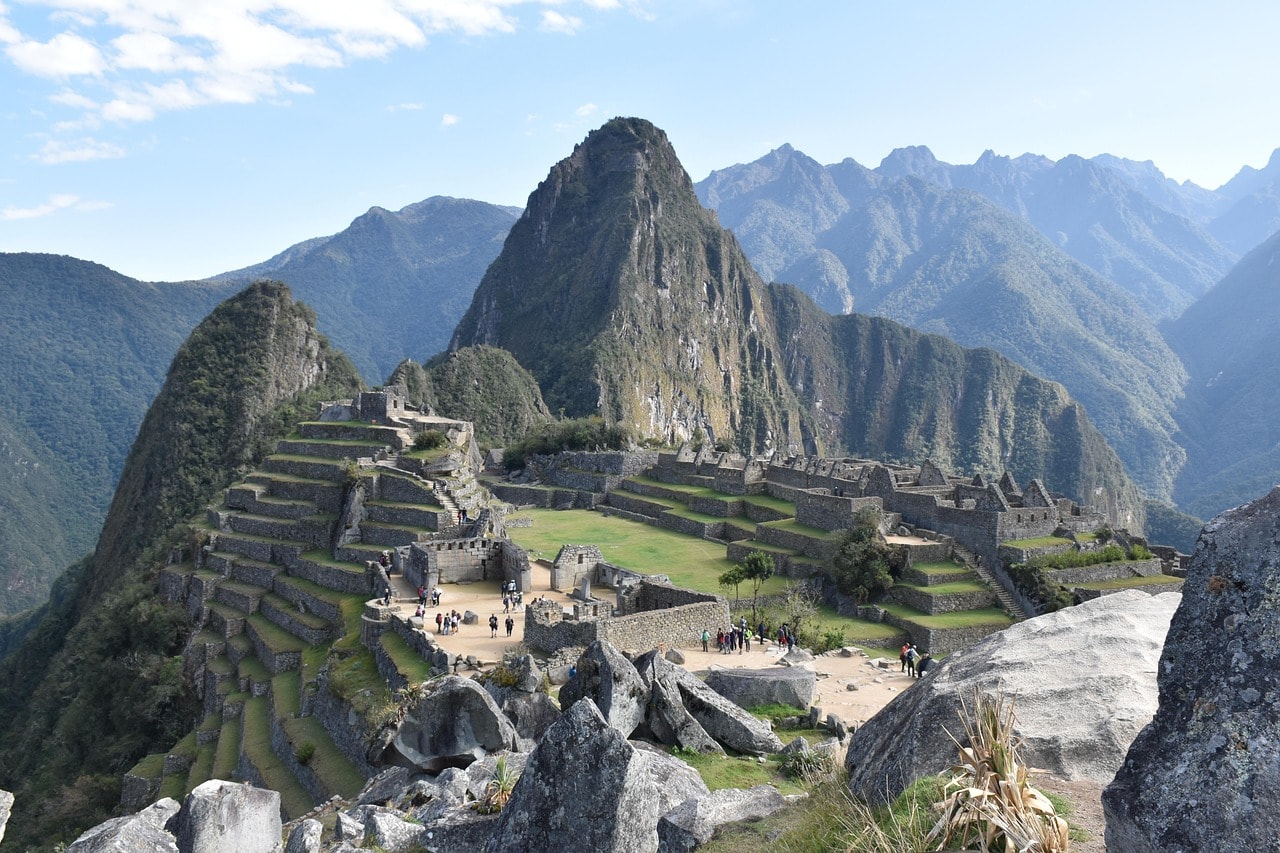
The stone bench was cold, even through my fleece. I’d been sitting there for forty minutes, watching the sun crawl over the Huayna Picchu peak, waiting for the perfect photo. The clouds were stubborn, clinging to the ruins like a secret. I had planned this moment for two years—the right season, the right hiking permit, the right camera settings. But the clouds didn’t care about my plans. Neither did the llama that wandered past, chewing something unidentifiable, utterly indifferent to my existence.
The Itinerary That Became a Cage
I am a planner. My friends call me the 'trip architect' because I color-code spreadsheets and calculate walking times down to the minute. For Machu Picchu, I had a ten-page document: train schedules, entrance times, which ruins to see in what order to catch the best light. I’d booked the Huayna Picchu permit six months in advance, woke at 3:30 a.m. to catch the first bus, and elbowed my way to the front of the gate. I was doing everything right.
But as I sat on that bench, the sun finally broke through, and the ruins emerged in all their glory. I snapped my photos. I checked them on my screen. They were perfect. And then I felt nothing. Just the cold seeping into my bones and a strange, hollow ache. This was supposed to be the pinnacle of my travel life. Instead, I was already thinking about the next item on my list—the Sun Gate, the Inca Bridge, the damn souvenir shop.
When the Plan Falls Apart
It happened on day three of the Inca Trail, the part I’d been dreading: Dead Woman’s Pass. I’d trained for months, but the altitude hit me like a wall. My head pounded, my legs turned to lead, and I had to stop every ten steps to gasp for air. My guide, a wiry Quechua man named Elías, walked beside me in silence. He didn’t offer platitudes or check his watch. He just waited.
At one point, I sat down on a rock, defeated. 'I can’t do this,' I said, more to myself than to him. Elías crouched down and pointed at a tiny yellow flower growing out of a crack in the stone. 'That’s called a q’antati,' he said. 'It only blooms above 4,000 meters. It doesn’t rush. It just grows when the time is right.' I stared at that flower for a long time. I don’t know if it was the exhaustion or the altitude, but I started to cry. Not from pain—from relief. I’d been so busy conquering the mountain that I’d forgotten to be on it.
“The mountains don’t care how many checkpoints you’ve cleared. They only ask that you show up, and let them show you what they want to show you.” — Elías, my guide
Learning to Sit in the Silence
After the trek, I had three days left in Cusco. My original plan: visit the Sacred Valley, the salt mines, the ruins of Moray. But something had shifted. I woke up on my first free day and felt no urge to check my spreadsheet. I walked to the Plaza de Armas, sat on a bench, and watched the old women selling choclo and cheese. The sun was warm. A dog slept next to me. I stayed there for two hours, doing nothing. It was the most luxurious feeling in the world.
That afternoon, I wandered into a tiny museum dedicated to pre-Columbian textiles. I’d never even heard of it. A docent took me through the rooms, explaining how the weavers would deliberately weave mistakes into their cloth because they believed only gods could create perfection. 'The flaw is the soul of the piece,' she said. I thought about my perfect photos, my perfect itinerary. I had been chasing a version of travel that didn’t exist. The real thing was messy, unpredictable, and often boring in the best way.
The Gift of the Unplanned
On my last day, I skipped the ruins of Pisac. Instead, I took a random collectivo to a village called Chinchero, where a local family let me help make tortillas in a mud oven. The grandmother, Doña Juana, laughed at my clumsy hands and let me knead the dough while she told me about her childhood, her sheep, and the time she saw a condor carry off a baby goat. The tortillas were burnt. They were the best I’d ever eaten.
Later, as I rode back to Cusco in the back of a pickup truck, the wind in my hair, I realized what I’d been missing. Travel isn’t about collecting places or perfecting photos. It’s about the moments that happen when you stop trying to curate them. The empty seat on that bench at Machu Picchu became my favorite memory—not because of the view, but because of the space it left for me to just be there.
I still plan. I still have spreadsheets. But now, I leave blank slots in every itinerary. Two hours here, a free afternoon there. I’ve learned to let the clouds do what they want, to let the llamas wander, and to let the perfect moments find me instead of chasing them. And that, I think, is the only souvenir worth bringing home.
I still have the photo of Machu Picchu on my phone. I’ve never posted it. It’s not the clearest, and the clouds obscure the peak. But in the corner of the frame, there’s a llama, mid-blink, looking as unbothered as I once wished I could be. I look at it sometimes and smile. I see the empty bench. I see the sun breaking through. And I remember that the best view I ever had wasn’t through a lens—it was through my own tired, teary eyes.



Comments (0)
No comments yet. Be the first to comment!