

Explore More
Travel is one of the best ways to explore new destinations, experience different cultures, spend quality time with loved ones, and create unforgettable memories. Whether you are planning a weekend road trip, a family vacation, a business journey, or a long-distance adventure, travel safety should always be a priority.
A well-planned journey is not only about choosing the right destination, vehicle, hotel, or itinerary. It is also about understanding potential risks and taking simple precautions before and during your trip.
This comprehensive travel safety guide covers the most important things every traveller should know before hitting the road.
1. Plan Your Journey in Advance
One of the simplest ways to make your trip safer is to plan ahead.
Before starting your journey, research:
Your destination and route
Weather and road conditions
Local traffic rules
Available transportation options
Accommodation details
Emergency services
Important travel documents
Fuel stations and rest stops on long routes
If you are travelling by road, avoid depending entirely on last-minute arrangements. Keep your route, important addresses, booking details, and emergency contacts easily accessible.
Good planning reduces unnecessary stress and helps you respond better to unexpected situations.
2. Choose a Reliable Vehicle & Transportation Provider
Your vehicle plays an important role in road-trip safety.
Whether you are hiring a self-drive car, car with driver, bus, tempo traveller, or another rental vehicle, choose a reliable and properly maintained vehicle.
Before starting your journey, check:
Brakes
Tyres
Headlights and indicators
Seat belts
Spare tyre
Fuel level
Basic tools
Vehicle documents
Insurance and registration validity
For long-distance journeys, vehicle condition becomes even more important.
A comfortable vehicle is good. A safe and well-maintained vehicle is essential.
3. Always Wear Your Seat Belt
Seat belts are one of the most basic and effective safety measures in a vehicle.
The driver and every passenger should wear a seat belt whenever the vehicle is moving.
Do not assume that a short distance is risk-free. Accidents can happen within a few minutes of starting a journey.
For children, use an appropriate child restraint system whenever possible and follow local regulations.
4. Avoid Distracted Driving
Driving requires complete attention.
Drivers should avoid:
Using a mobile phone while driving
Texting
Taking photographs
Adjusting navigation while the vehicle is moving
Eating while driving
Excessive conversations that distract the driver
Other activities that take attention away from the road
If you need to use your phone, check navigation, make a call, or respond to a message, stop at a safe location first.
A few seconds of distraction can have serious consequences.
5. Never Drive Under the Influence
Driving after consuming alcohol or drugs can severely affect judgement, reaction time, coordination, and decision-making.
Never drive under the influence.
If you have consumed alcohol or any substance that can impair your ability to drive, arrange alternative transportation or allow a sober, legally permitted driver to take over.
No destination is more important than your safety.
6. Follow Speed Limits & Local Traffic Rules
Different cities, highways, and regions may have different speed limits and traffic regulations.
Always follow posted speed limits and local road rules.
Avoid aggressive driving, unnecessary overtaking, sudden lane changes, and excessive speeding.
Remember that the safest speed is not necessarily the fastest speed. It is the speed that allows you to maintain proper control based on:
Traffic
Road quality
Weather
Visibility
Vehicle condition
Surrounding conditions
7. Take Regular Breaks on Long Journeys
Driver fatigue is a major road-safety concern, particularly during long-distance travel.
If you are driving for several hours, take regular breaks.
Stop at a safe location to:
Rest
Stretch
Drink water
Eat something
Refresh yourself
Check the vehicle
Avoid continuing to drive when you feel sleepy or mentally exhausted.
If possible, share driving responsibilities with another qualified driver.
A tired driver can be as dangerous as a distracted driver.
8. Be Extra Careful at Night
Night driving can be more challenging because of reduced visibility, fatigue, glare from headlights, and unexpected road conditions.
If travelling at night:
Reduce speed when visibility is poor
Keep headlights and windscreen clean
Maintain a safe following distance
Avoid unnecessary overtaking
Watch carefully for pedestrians and two-wheelers
Take breaks if you feel tired
On unfamiliar roads, extra caution is especially important.
9. Check Weather & Road Conditions
Weather can change quickly and may significantly affect travel conditions.
Before beginning your journey, check for:
Heavy rain
Flooding
Fog
Snow
Strong winds
Landslides
Extreme temperatures
Road closures
During monsoon or extreme-weather conditions, do not take unnecessary risks simply to maintain your original schedule.
Sometimes the safest travel decision is to delay the journey.
10. Keep Your Important Documents Safe
Carry the documents required for your journey and keep digital backups where appropriate.
Depending on the trip, these may include:
Identification documents
Driving licence
Vehicle documents
Booking confirmation
Hotel reservation details
Insurance information
Emergency contacts
Tickets or permits where required
Avoid sharing sensitive personal information unnecessarily.
11. Protect Your Personal Belongings
Tourists can sometimes become easy targets for theft, especially in crowded areas.
Keep valuables secure and avoid displaying expensive items unnecessarily.
Important belongings such as:
Wallet
Passport
Phone
Cash
Cards
Jewellery
Electronics
should be kept safely with you.
When staying in hotels or travelling in shared transportation, do not leave valuables unattended.
12. Be Careful When Using Public Wi-Fi
Free public Wi-Fi can be convenient, but travellers should be cautious when using unsecured networks.
Avoid performing highly sensitive activities on unfamiliar public networks whenever possible.
For important accounts, use strong passwords and enable two-factor authentication.
Also avoid sharing confidential information with unknown people through messages, calls, or websites.
13. Share Your Travel Plan With Someone You Trust
For long-distance or remote travel, inform a trusted family member or friend about your itinerary.
Share important details such as:
Destination
Approximate travel schedule
Accommodation
Vehicle information
Expected arrival time
This becomes particularly useful if you are travelling alone or visiting an unfamiliar area.
14. Keep an Emergency Kit
A basic emergency kit can be extremely useful during road travel.
Consider carrying:
First-aid supplies
Drinking water
Flashlight
Power bank
Phone charger
Basic vehicle tools
Spare tyre equipment
Necessary personal medicines
Emergency contact information
For long road trips, additional supplies may be appropriate depending on the destination and weather conditions.
15. Stay Alert in Unfamiliar Locations
When visiting a new city or destination, remain aware of your surroundings.
Be cautious when:
Walking alone in unfamiliar areas
Travelling late at night
Accepting help from strangers
Using unofficial transportation
Visiting isolated locations
Carrying large amounts of cash
Use established transportation providers and follow local safety guidance.
16. Respect Local Laws & Customs
Every destination has its own laws, regulations, and cultural practices.
Before travelling, learn about important local requirements.
Respect:
Traffic regulations
Local customs
Photography restrictions
Protected areas
Religious places
Environmental regulations
Parking rules
Responsible travellers not only protect themselves but also contribute positively to the destinations they visit.
17. Safety for Family & Group Travel
When travelling with children, elderly passengers, or large groups, additional planning may be required.
Make sure:
Everyone knows the basic itinerary
Children remain supervised
Emergency contacts are available
Everyone follows vehicle safety rules
The vehicle has adequate seating capacity
Luggage does not obstruct passengers or emergency exits
For group travel, choose a vehicle that is appropriate for the number of passengers and luggage.
18. What to Do in Case of an Emergency
Even with careful planning, unexpected situations can happen.
If you face an emergency:
Stay calm.
Move to a safe location if possible.
Contact the appropriate local emergency service.
Inform your travel companions or emergency contact.
Follow instructions from local authorities.
Avoid taking unnecessary risks.
If your vehicle breaks down, move it to a safe location when possible and use appropriate roadside assistance or vehicle support services.
19. Travel Safety Starts Before You Leave Home
Many travel problems can be prevented before the journey even begins.
Before leaving, ask yourself:
Is the vehicle safe?
Is the route suitable?
Is the weather favourable?
Do I have the necessary documents?
Does someone know my travel plan?
Am I physically and mentally ready to travel?
Taking a few minutes to check these things can make a significant difference.
Final Thoughts
Travel should be exciting, enjoyable, and memorable—but safety should never be treated as an afterthought.
From choosing a reliable vehicle and following traffic rules to protecting your belongings and preparing for emergencies, small precautions can make a major difference.
Whether you are travelling alone, with family, with friends, or as part of a large group, remember one simple principle:
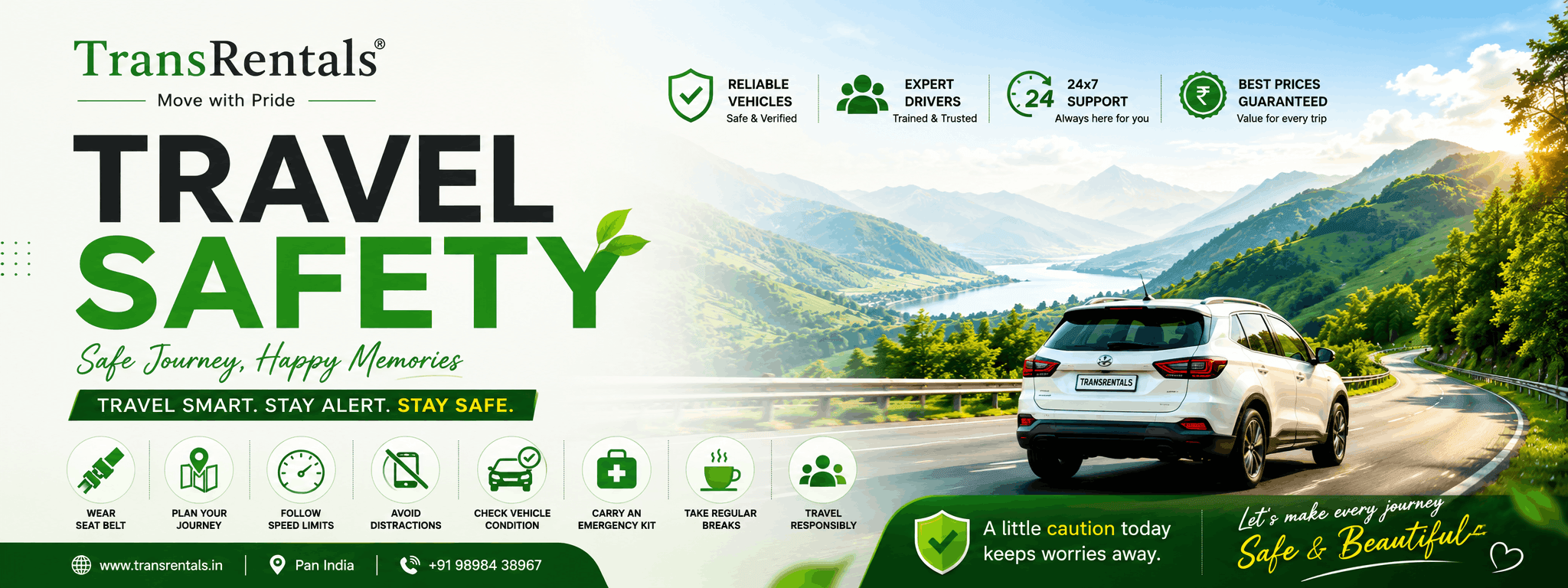
Travel Smart. Stay Alert. Stay Safe.
A successful journey is not simply about reaching your destination. It is about reaching there safely and returning with great memories.




Comments (0)
No comments yet. Be the first to comment!