
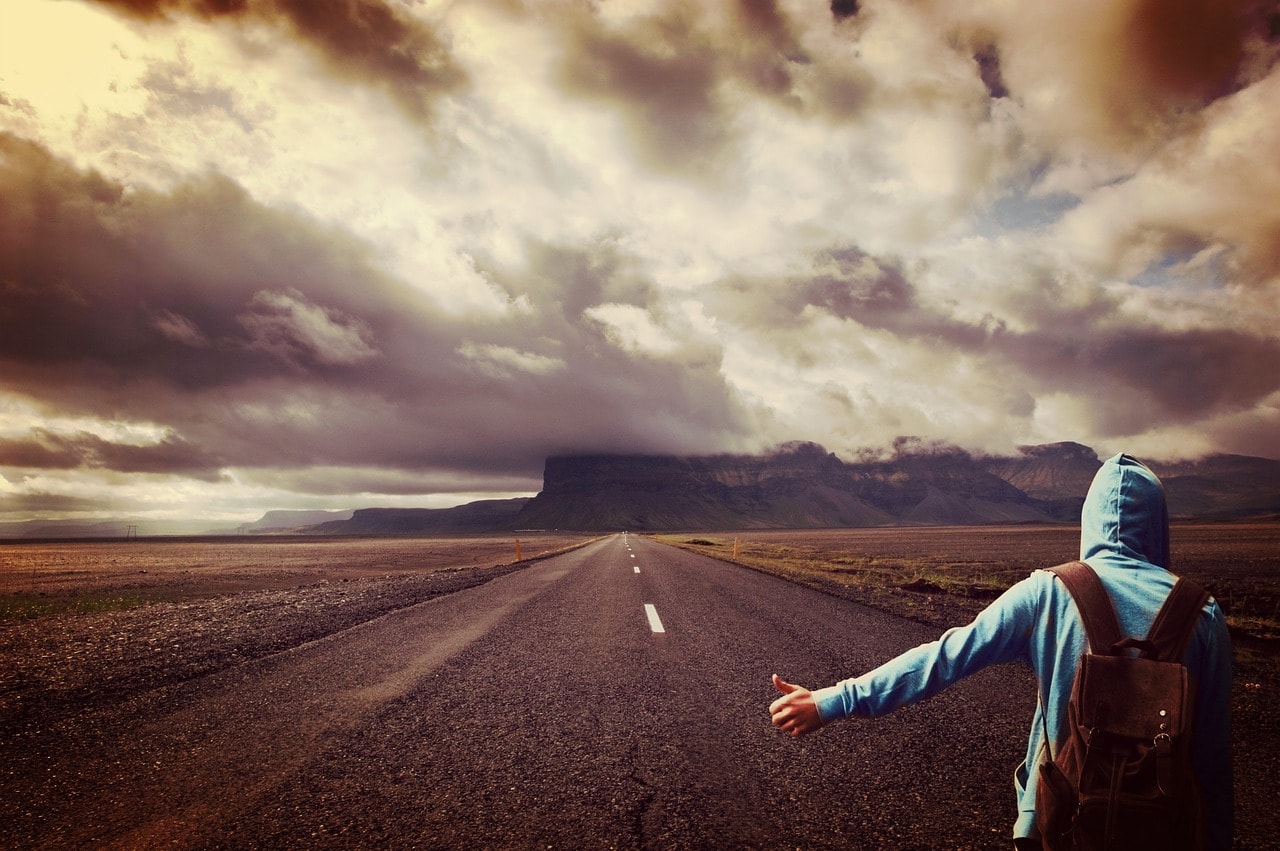

Last winter I spent four days in Jodhpur with a working phone, a full battery, and no map app open. On day two I took a wrong turn near the clock tower and ended up in a lane of brass-workers who hammered out pots from dawn. I stood there for twenty minutes. I have been to Jodhpur three times before that, and I had never seen that street. The difference wasn't luck. It was that I had stopped optimizing every step from A to B.
Here's the question worth sitting with: when did getting lost become a failure instead of the whole point of going somewhere? We now treat a trip like a logistics problem to be solved—routes pre-loaded, ratings checked, every meal reserved. The result is that we arrive having already "seen" the place on a screen, then spend the trip confirming it. What if the most valuable travel skill in 2026 is the willingness to put the phone away and be genuinely, productively disoriented?
What it really is
Getting deliberately lost is not the same as being reckless. It's a practice: you remove the safety net of turn-by-turn directions for a bounded stretch of time, in a place where being lost is inconvenient rather than dangerous. You still know which city you're in. You still have a way to get back. You just stop knowing exactly where you are for an hour or three, and you let that be interesting instead of alarming.
The distinction matters. There's a difference between lost (a problem to solve) and disoriented (a state to explore). The first triggers panic and a desperate hunt for signal. The second opens your attention. You start noticing the bakery because you're hungry, not because it has 4.7 stars. You read street signs. You ask a shopkeeper which way the river is. You become a person in a place rather than a cursor moving along a blue line.
I'd argue it's the oldest travel skill there is, and the one we've most thoroughly outsourced. My grandfather navigated entire countries with a paper map and a willingness to ask. We've traded that for a voice that says "recalculating" in a tone of mild disappointment.
Why it matters
Three reasons, and none of them are nostalgic hand-wringing.
First, attention is the actual currency of travel. When you don't know what's next, your brain pays attention to what's now. Studies on wayfinding and memory consistently find that people who navigate actively—deciding turns, forming a mental map—remember a route far better than those who passively follow instructions. The same holds for a city. Follow the dot and you remember the dot. Find your own way and you remember the alley, the smell of frying, the dog that followed you for a block.
Second, it's a defense against the homogenized trip. Everyone with the same app gets the same recommended list, walks the same loop, eats at the same three places. The algorithm is efficient and it is also a funnel. The places that never make the list—the brass-workers' lane, the neighborhood market, the temple courtyard where old men argue about cricket—are exactly the ones you can only reach by accident.
Third, it changes you, not just your itinerary. Being mildly lost and fine with it is a small act of courage. Do it a few times and you start to trust that the world is generally navigable, that strangers help, that you can handle uncertainty. That's a transferable feeling. People come home from a good wander braver than they left.
The best thing I ever found in a foreign city was a street I was never looking for. You cannot search for what you don't know exists.
How it works
The mechanics are simple, and the discipline is in the setup. You want a container: a known starting point, a known rough direction home, and a rule that stops the experiment from becoming an emergency.
Think of it as a dial, not a switch. On the safest setting you wander a walkable old quarter with no agenda. Crank it up and you take a random bus two stops and walk back. The point is to remove the specific information that turns discovery into a checklist—usually the "nearby attractions" screen—while keeping the information that keeps you safe.
A few principles that make it work:
- Pick the right place. Dense, walkable, safe neighborhoods with a clear landmark (a river, a hill, a tower) are ideal. A grid city with numbered streets is forgiving. A sprawling suburb with no sidewalks is not.
- Set a return anchor, not a route. Know one thing: the name of your guesthouse, the nearest big landmark, or the metro station. That's your tether. Everything else is open.
- Use a compass, not a map. A simple direction—"the river is east"—lets you wander freely and still find your way back.
- Give it a time box. Ninety minutes to three hours. Long enough to get somewhere unexpected, short enough to stay fun.
- Talk to people. Ask for directions even when you don't need them. It's the fastest way to turn a stranger into a source.
The one non-negotiable: tell someone where you're roughly headed and when you'll be back. Adventure and stupidity are different things, and a text to your travel companion is the line between them.
How to practice it
Start at home. Before you try this in a new city, do it in your own. Take a bus to a stop you've never used and walk home without the map. You'll be amazed how much of your own town you've never seen. This builds the muscle in low-stakes conditions.
Then, on the road, try this routine:
- Leave the accommodation with a full battery, some cash, water, and the name of your place written down.
- Pick a direction and walk for twenty minutes without checking your phone.
- When you hit something interesting—a market, a crowd, a smell—stop and follow it.
- Order food somewhere with no English menu and no photos. Point at what someone else is eating.
- When you're ready to head back, ask a person, not an app. "Which way is the river?" or "How do I get to the clock tower?"
- Allow one wrong turn on the way home. Just one. That's where the good stuff hides.
A practical note for Indian cities and small towns: this works beautifully in old quarters—the galis of Varanasi, the lanes of Udaipur, the bylanes off any bazaar—because they were built for walking and are dense with life. It works less well after dark or in unfamiliar outskirts. Read the room. If a street feels wrong, trust that and move on. The whole point is to stay curious, not to prove something.
And bring a paper map if you can find one. Not to follow it, but because a folded map in your pocket is a kind of permission slip. It says you're exploring, not commuting.
The next time you land somewhere new, try one unplanned afternoon. No list. No ratings. Just a direction and a willingness to be wrong about where you are. You'll come back with a story instead of a photo of a queue. The brass-workers of Jodhpur are still hammering away in that lane, and I only found them because I stopped looking for anything in particular.




Comments (0)
No comments yet. Be the first to comment!